Contested Legitimacies
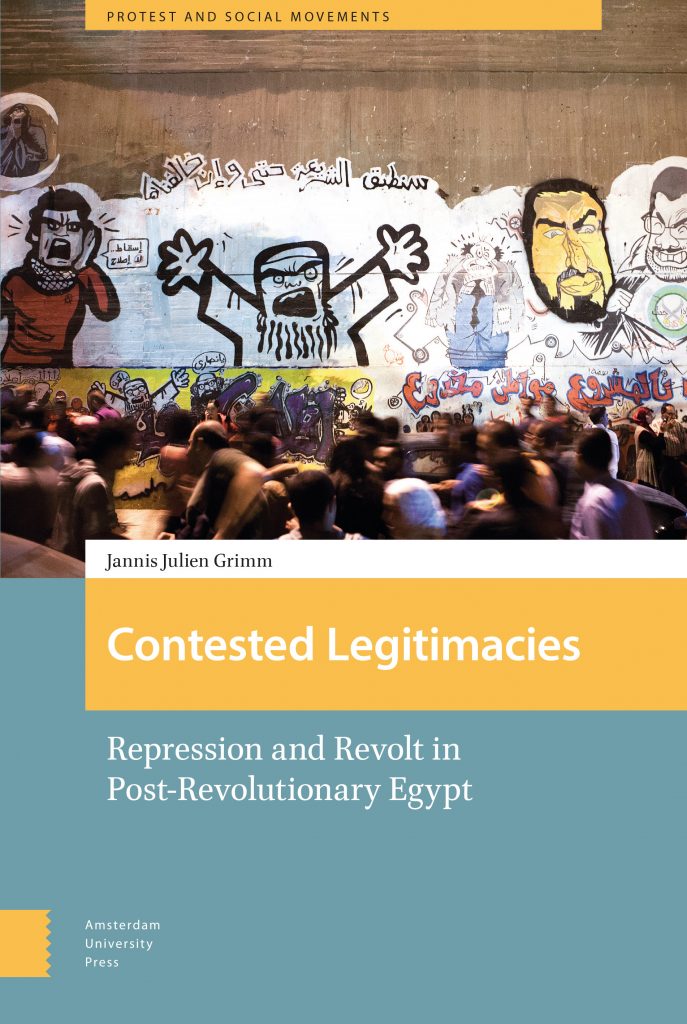

Contested Legitimacies
Repression and Revolt in Post-Revolutionary Egypt
Jannis Julien Grimm
Preface
Accounts of revolutions are necessarily situated and partial. As Jack Shenker (2016) writes, “What defines a revolution – where it can be located on a calendar and a map, what it includes, who speaks for it, the things it seeks to change – is never a neutral question” (p. 11). Accordingly, this book is political by default: for its perspective, which honors the premise that “the vision is better from below” (Haraway, 1988, p. 584); for its choice of topic – an investigation of struggle and contention within a regime that professes unity and concordance; and for its source archive, which gives voice to the mobilized people as the agents of change.
Many of the crises described and investigated in this book are rooted in group-based forms of inequality. These inequalities are not just testing grounds for refining and elaborating theory. On the contrary, they are real arenas of struggle that affect the livelihoods of real people. Critical research must recognize these struggles as such by taking them as the point of departure and by aiming towards their solution. Discourse analytical projects, such as this book, have a particular responsibility in this regard because power relations that cement inequalities and legitimize oppressive modes of domination have a vital discursive basis of reproduction – in Egypt as much as elsewhere. Accordingly, I hope that this book remains not just an academic treatise, evaluated only by methodological quality criteria, but one that also provides some insights for activists on how to maintain their resistance in the darkest hour. The presented cases demonstrate that even when the physical space is limited for protest, there often remains discursive space for contesting oppressive power relations.
Different stories could have been explored in this book about Egypt’s post-revolutionary trajectory. One could think about exploring how the Rabaa massacre has produced embodied memories that still leave an imprint on Egyptians’ fears, desires, and action choices today. One could explore how Egyptians have grappled with individual and collective memories of bloodshed. One could investigate how the nationalist turn has catalyzed the emergence of an affective regime to govern the desires that were born out of the revolutionary experiences of 2011. Or, more modestly, one could explore how emotions in Egypt, up until today, are subjected to a friend-foe binary to support the antagonizing of all those who dare articulate dissent. Given the constraints of this book, I am unable to follow up on these and many other threads. Nor am I able to write about the variety of actors who have been mentioned in this book in passing and whose voices have not been explored with the same level of detail. To reach a better understanding of those fateful months after the military coup in Egypt, it would be necessary to explore these silences in more detail. Aware of these constraints, I don’t claim to provide an exhaustive account of Egypt’s bloody summer of 2013. The presented truths must be taken as “positioned truths” (Abu-Lughod, 2014, p. 468). Many more stories could be told without providing a complete picture. I believe that putting these different perspectives into dialogue with one another is what gives our individual subjective accounts value and worth.


Te puede interesar

El programa de Educación continua del COMECSO invita a sus talleres
Alejandra Valdés Teja - Oct 15, 2026Cartografía social-pedagógica: producir conocimiento y repensar el territorio desde la educación Imparte: Laura Eugenia Alejandri Rábago Descripción Este taller ofrece…
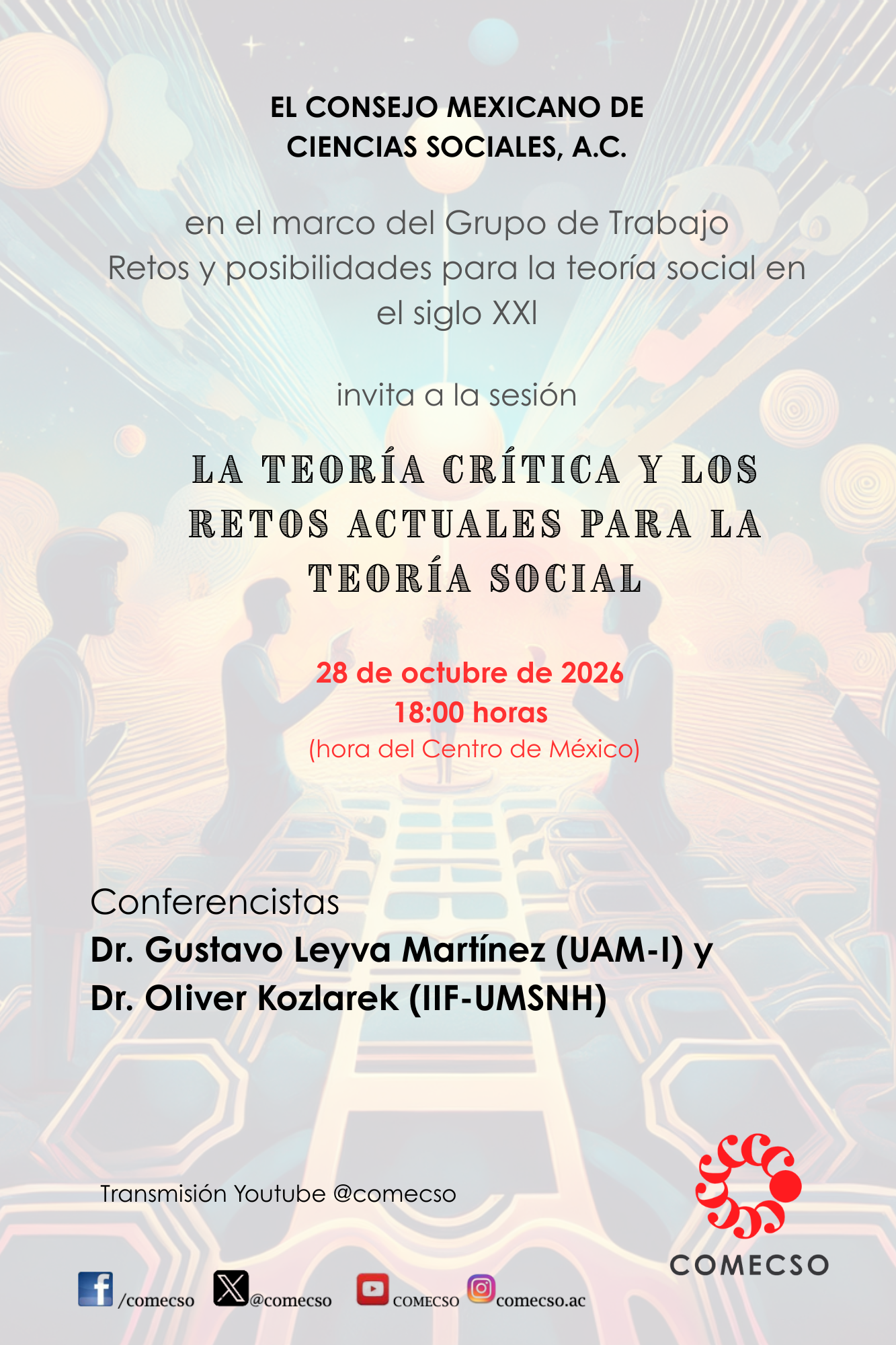
Conferencia La Teoría crítica y los retos actuales para la teoría social
Alejandra Valdés Teja - Oct 07, 2026El Grupo de Trabajo Retos y posibilidades para la teoría social en el siglo XXI invita a conferencia La Teoría crítica…
Talleres virtuales
Laura Gutiérrez - Sep 17, 2026Con el objetivo de transmitir conocimientos y desarrollar habilidades específicas que contribuyan a la práctica docente, la investigación, la innovación,…
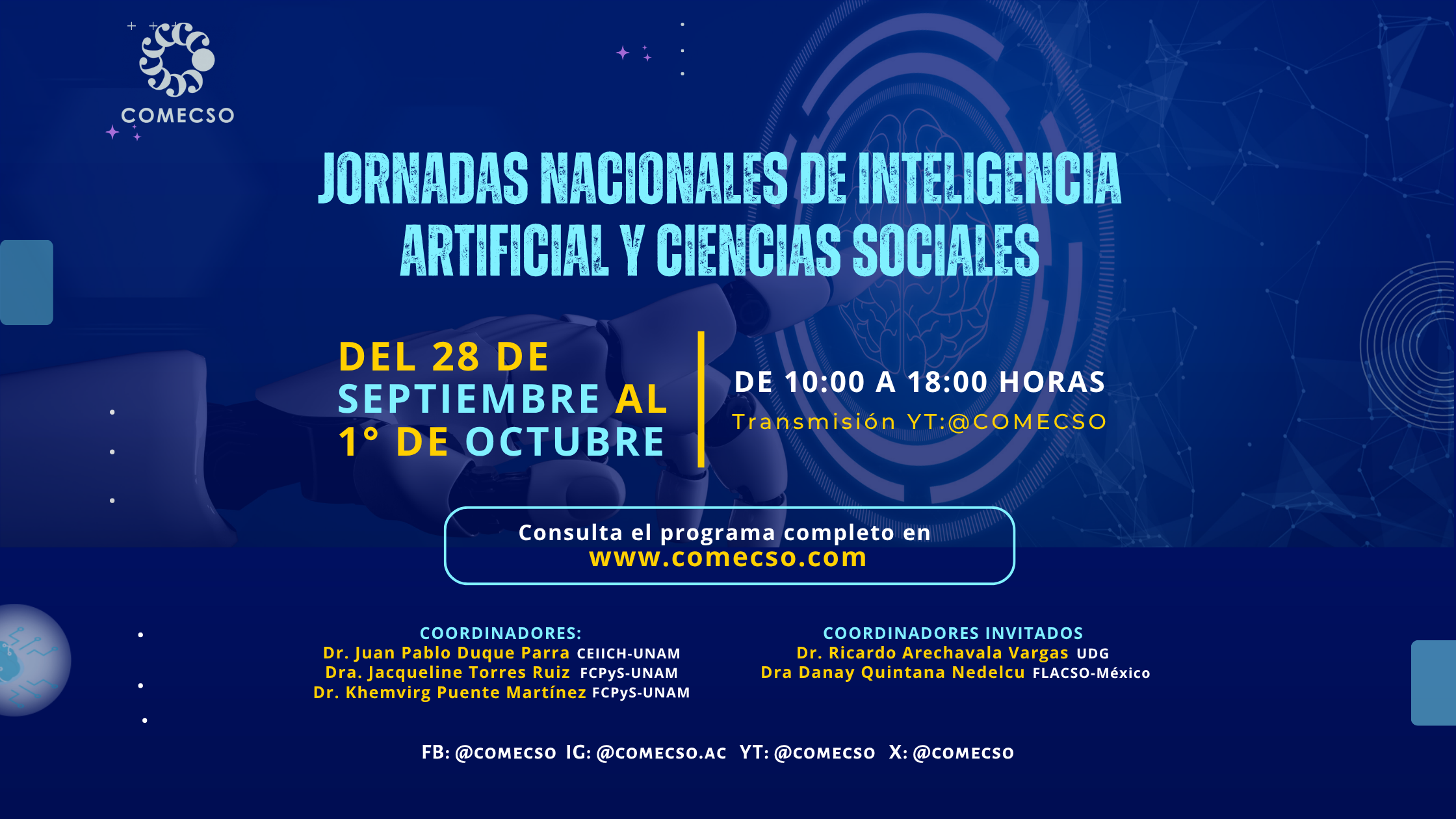
Horizontes de investigación sobre la Inteligencia Artificial desde las Ciencias Sociales
comecso - Sep 14, 2026Coords. Juan Pablo Duque, Khemvirg Puente y Jacqueline Torres-Ruiz Objetivos: Invitar a especialistas de todas las disciplinas de las Ciencias…
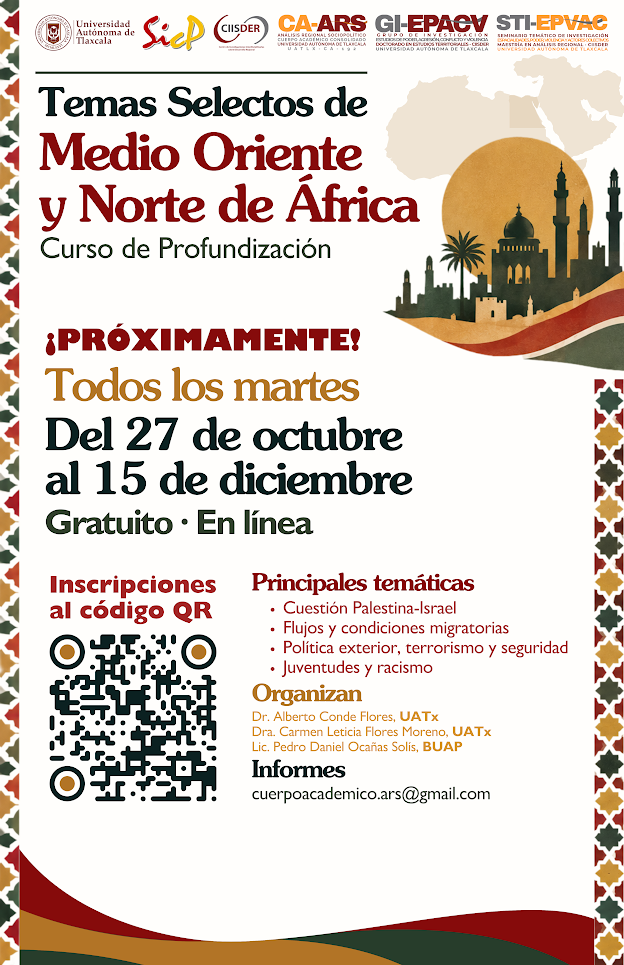
🌍 Temas selectos de Medio Oriente y Norte de África. Curso de profundización
Alejandra Valdés Teja - Oct 16, 2026El Cuerpo Académico Análisis Regional Sociopolítico (CIISDER-UATx) invita a este curso gratuito con especialistas de México, España y Emiratos Árabes…
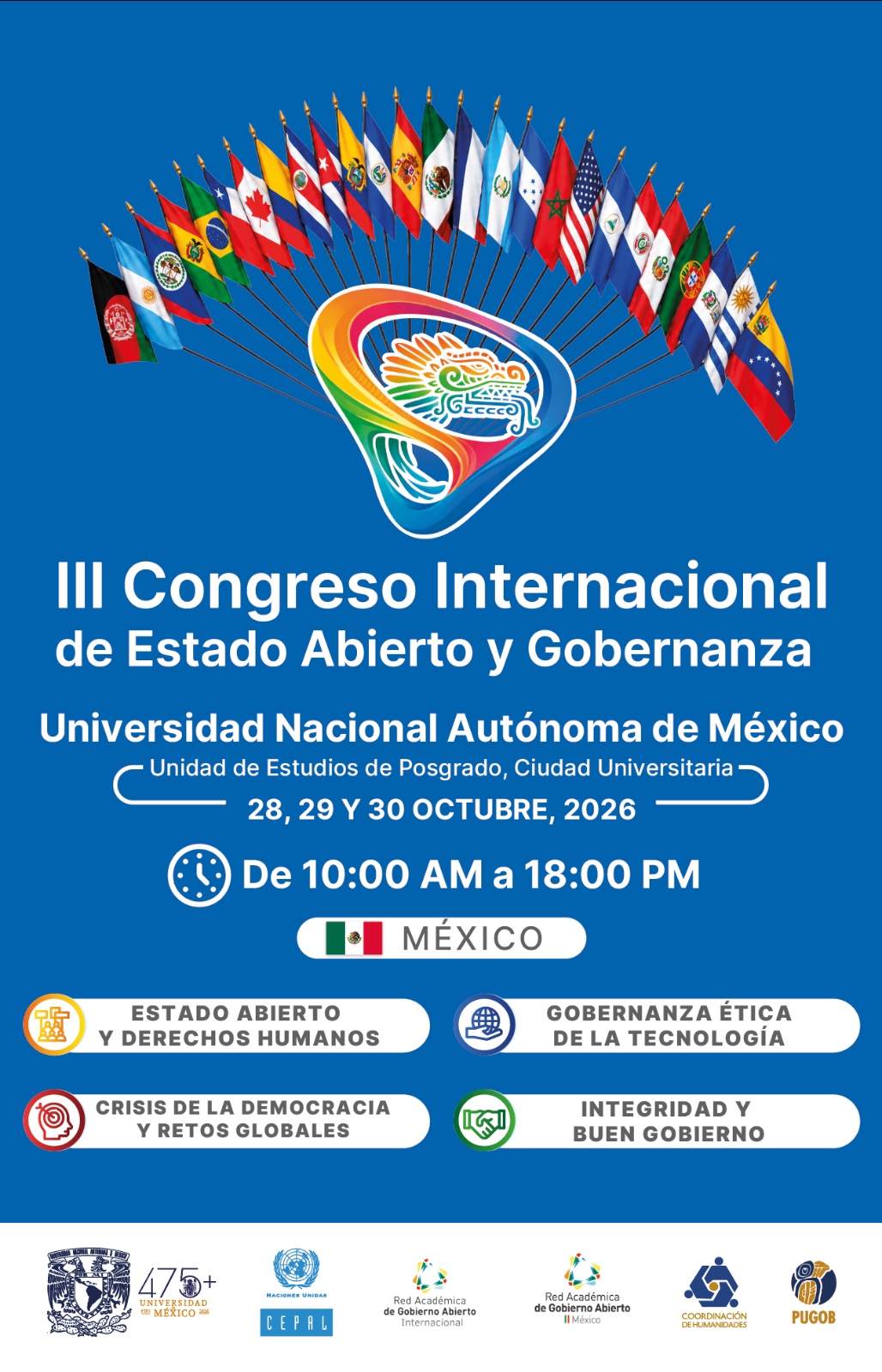
III Congreso internacional de Estado Abierto y Gobernanza
Alejandra Valdés Teja - Oct 16, 202628,29 y 30 de octubre de 10:00 a 18:00 horas. Unidad de Posgrado, Ciudad Universitaria.

Red de cuidados. Avistamiento y dibujo de cuidados interespecie
Alejandra Valdés Teja - Oct 16, 2026Taller organizado en el marco del Mes de los cuidados Red de cuidados. Avistamiento y dibujo de cuidados interespecie 21 de…
Grupos de trabajo
Conferencia La Teoría crítica y los retos actuales para la teoría social
Alejandra Valdés Teja - Oct 07, 2026Horizontes de investigación sobre la Inteligencia Artificial desde las Ciencias Sociales
comecso - Sep 14, 2026Destacadas
El programa de Educación continua del COMECSO invita a sus talleres
Alejandra Valdés Teja - Oct 15, 2026Conferencia La Teoría crítica y los retos actuales para la teoría social
Alejandra Valdés Teja - Oct 07, 2026Horizontes de investigación sobre la Inteligencia Artificial desde las Ciencias Sociales
comecso - Sep 14, 2026🌍 Temas selectos de Medio Oriente y Norte de África. Curso de profundización
Alejandra Valdés Teja - Oct 16, 2026