Political Parties and Democracy


POLITICAL PARTIES AND DEMOCRACY
Internal and External Challenges
Department of Political Sciences, Sapienza University
Rome, Italy | October 15th-16th 2020
Submission deadline (abstracts): 15 May
Notification of acceptance: 3 June
Submission deadline (full papers): 9 September
The worldwide decline of political party influence pointed out by different scholars since at least the 1990s has continued and even accelerated its pace. This process raises a serie of challenges to democracies, such as the reduction of democratic accountability, greater turmoil and economically costly subversions of the rule of law, and increasing difficulties to channel demands from below.
In many long-standing democracies, political parties seem to have strongly reduced their capacity to recruit and retain members, mobilize their voters conserving their long-term loyalty, represent their own constituencies, and reverse widespread political disaffection. Moreover, the weakening of traditional parties has been accompanied by a sharp decline in the support for center-left parties in countries like France, Italy, Germany, and the UK, and an increase of polarization: a new upsurge of the radical right in Europe and the Americas (USA, Brasil, Italy, Chile, Hungary, France) and the rebirth of a radical left, in the context of a renewed interest in socialism. This so-called new left has been capable of accessing the central government (Greece, Spain), and it obtained electoral success at the legislative level (France, Germany). However, the radical left also challenges democratic governance via non- institutionalized social movements (Chile, France).
Therefore, it seems that liberal democracy is currently tensioned by illiberal tendencies at the macro level. But the meso level of politics also faces challenges. One of them is that many aspects of politics seem to become more personalized and focused on individual actors in the political process. Political parties have historically played a fundamental role in aggregating voters’ interests through strong programmatic platforms –in particular in Europe, the region in which they took their modern shape and attained the highest levels of institutionalization. Different factors are pointed out by scholars as causes for their delegitimization: a) the ideological convergence between liberal and social democratic parties, b) the incapacity of “old” parties to connect with the diverse interests of contemporaneous societies, c) the weakening of their representative function, and d) the failure of liberal democracy to achieve welfare for all citizens. These factors have had an impact on the growing influence of direct democracy claims and of innovative ways of participatory democracy.
The CPS conference aims to explore the new internal and external challenges to political parties in order to account for their multifaceted transformations and comparatively examine the different expressions of the decline of their influence. The conference will welcome papers within the scope of the following topics:
- The definition of political parties. Relations between institutional contexts, geographical patterns and the evolution of party organizations.
- The evolution of party membership and partisanship. This question invites to explore the relations between party members who hold different positions within the organization (party leaders members) and their challenges on internal governance.
- The evolution of the electoral performances of parties of the radical right and radical left (voters’ behavior, electoral geography, leadership).
- The extent of the “newness” of the political parties that have emerged in different contexts. This question implies to take into account the relation between “new” and “traditional” forms of party organization, focusing on some of its new features (e.g. use of internet and social networks) and the question of party resilience.
- The extent to which the personalization of politics has an impact on the inclusiveness and representativeness of political parties.
- The interplay between national and subnational politics in terms of the success of radical political parties, the participatory dimension of democracy, the personalization of politics, and other key dimensions to this call for papers.
Abstracts should be sent to: Gianluca Passarelli (gianluca.passarelli@uniroma1.it) or Stéphanie Alenda (salenda@unab.cl) and should not exceed 300 words. They should include:
- Title of the paper.
- Name, affiliation, and address of all authors. The presenting author (please underline her/his name) should be the person submitting the abstract.
- Name of one the topics (highlighted in bold) in which the paper should be presented.
Organised by: GIANLUCA PASSARELLI (Sapienza University), STÉPHANIE ALENDA (Andres Bello University), JULIETA SUÁREZ-CAO (Catholic University of Chile)


Te puede interesar

El programa de Educación continua del COMECSO invita a sus talleres
Alejandra Valdés Teja - Oct 15, 2026Cartografía social-pedagógica: producir conocimiento y repensar el territorio desde la educación Imparte: Laura Eugenia Alejandri Rábago Descripción Este taller ofrece…
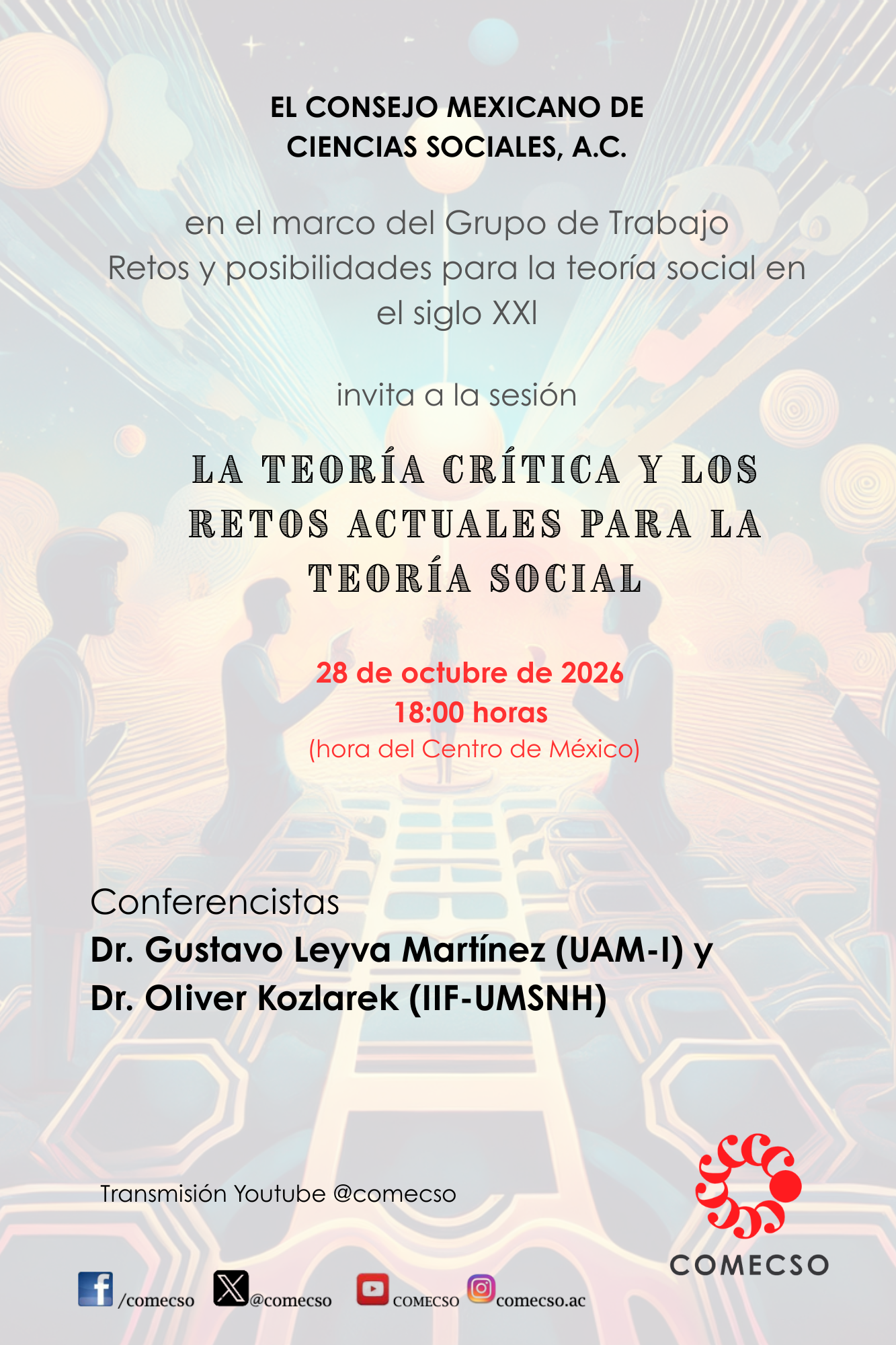
Conferencia La Teoría crítica y los retos actuales para la teoría social
Alejandra Valdés Teja - Oct 07, 2026El Grupo de Trabajo Retos y posibilidades para la teoría social en el siglo XXI invita a conferencia La Teoría crítica…
Talleres virtuales
Laura Gutiérrez - Sep 17, 2026Con el objetivo de transmitir conocimientos y desarrollar habilidades específicas que contribuyan a la práctica docente, la investigación, la innovación,…
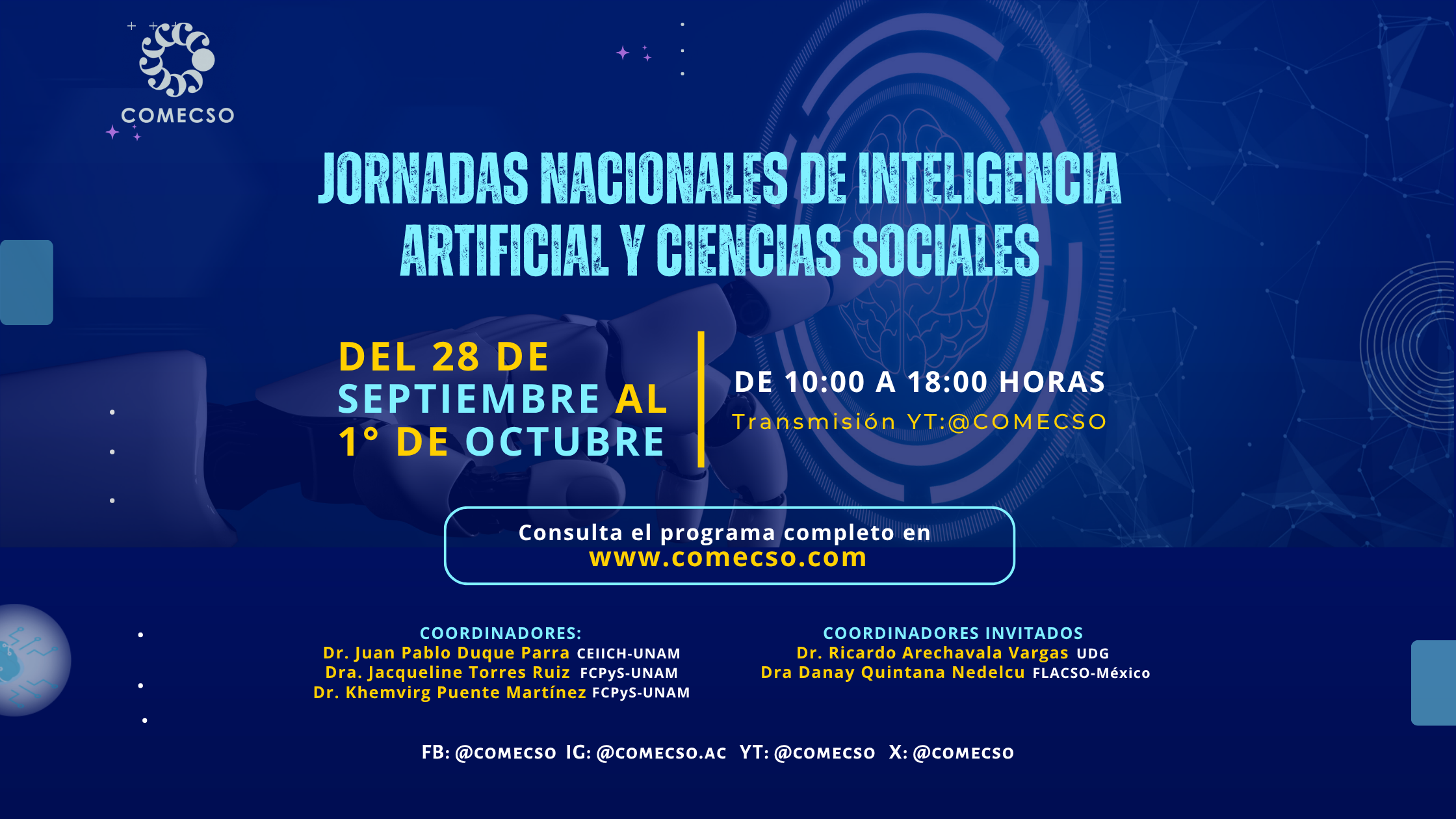
Horizontes de investigación sobre la Inteligencia Artificial desde las Ciencias Sociales
comecso - Sep 14, 2026Coords. Juan Pablo Duque, Khemvirg Puente y Jacqueline Torres-Ruiz Objetivos: Invitar a especialistas de todas las disciplinas de las Ciencias…
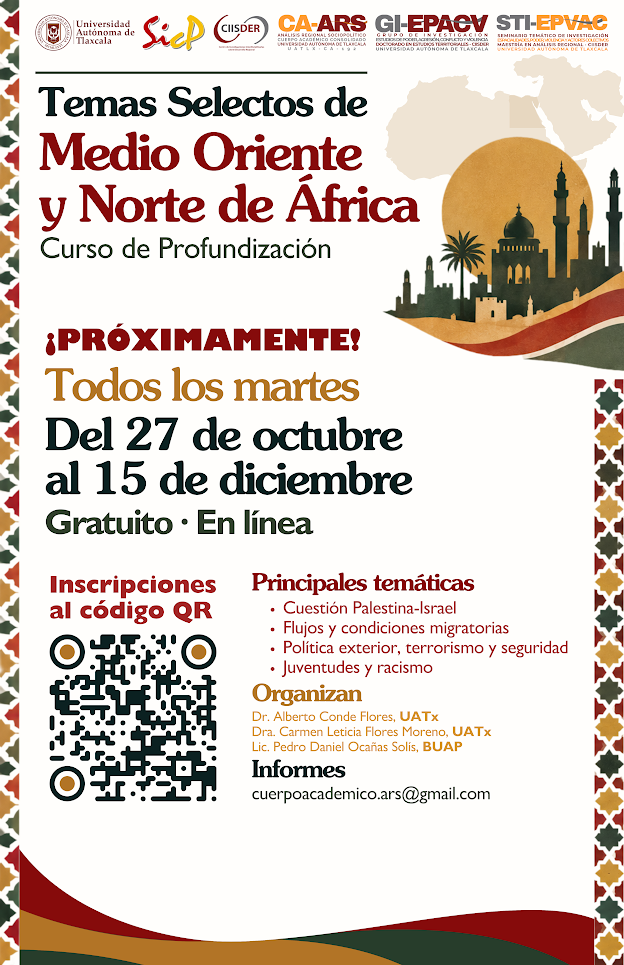
🌍 Temas selectos de Medio Oriente y Norte de África. Curso de profundización
Alejandra Valdés Teja - Oct 16, 2026El Cuerpo Académico Análisis Regional Sociopolítico (CIISDER-UATx) invita a este curso gratuito con especialistas de México, España y Emiratos Árabes…
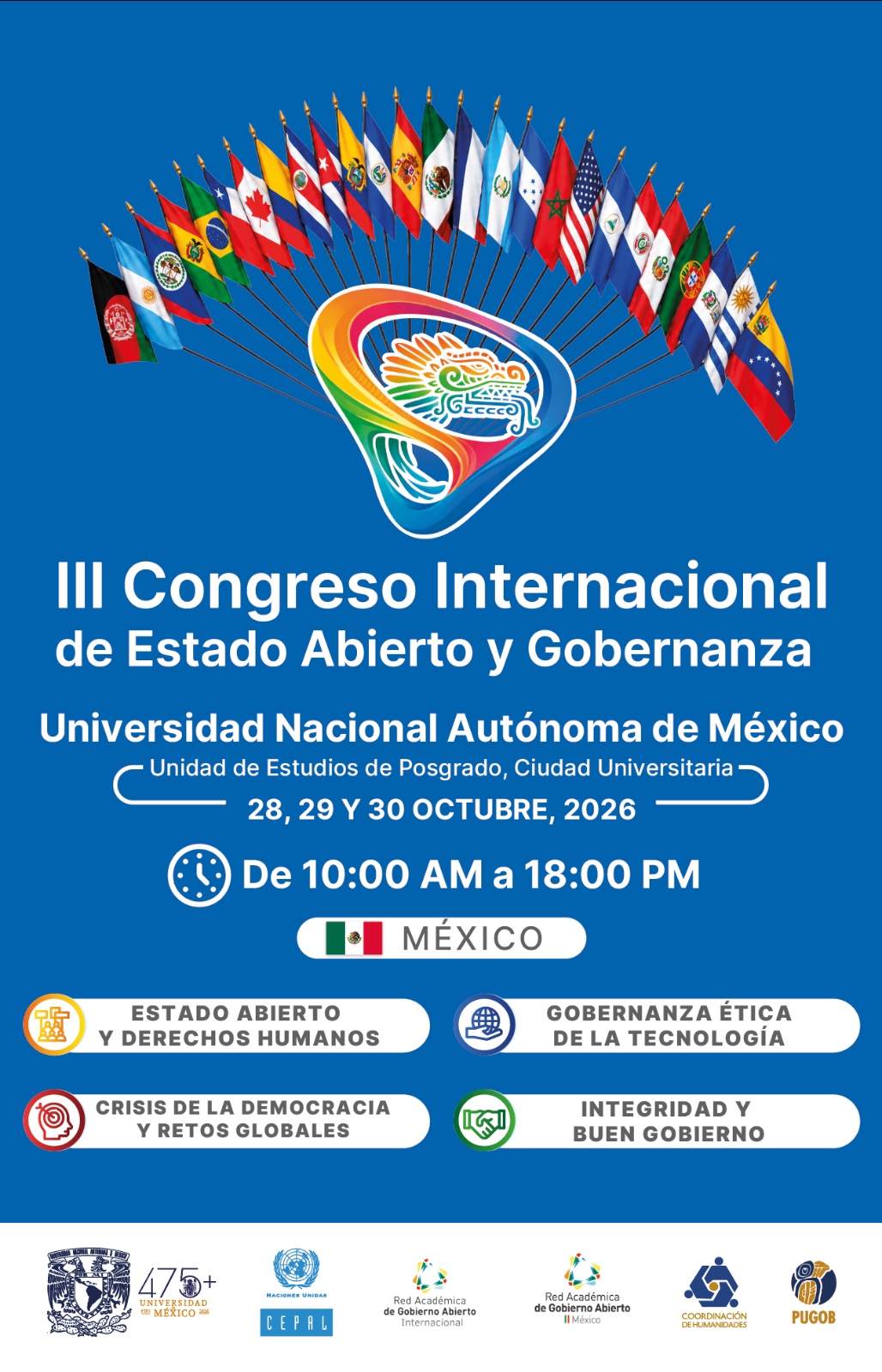
III Congreso internacional de Estado Abierto y Gobernanza
Alejandra Valdés Teja - Oct 16, 202628,29 y 30 de octubre de 10:00 a 18:00 horas. Unidad de Posgrado, Ciudad Universitaria.

Red de cuidados. Avistamiento y dibujo de cuidados interespecie
Alejandra Valdés Teja - Oct 16, 2026Taller organizado en el marco del Mes de los cuidados Red de cuidados. Avistamiento y dibujo de cuidados interespecie 21 de…
Grupos de trabajo
Conferencia La Teoría crítica y los retos actuales para la teoría social
Alejandra Valdés Teja - Oct 07, 2026Horizontes de investigación sobre la Inteligencia Artificial desde las Ciencias Sociales
comecso - Sep 14, 2026Destacadas
El programa de Educación continua del COMECSO invita a sus talleres
Alejandra Valdés Teja - Oct 15, 2026Conferencia La Teoría crítica y los retos actuales para la teoría social
Alejandra Valdés Teja - Oct 07, 2026Horizontes de investigación sobre la Inteligencia Artificial desde las Ciencias Sociales
comecso - Sep 14, 2026🌍 Temas selectos de Medio Oriente y Norte de África. Curso de profundización
Alejandra Valdés Teja - Oct 16, 2026