Filmic and Media Narratives of the Crisis

Following the 2015 Thessaloniki Works on the Narratives of Crisis (concerning the media narratives in general on the economic crisis and its enormous consequences especially for the European South) we organize a conference which will deepen the reflection on two special axes 1) filmic narratives & 2) mass and social media narratives.
In this frame, the EURCECOM (Centre of Studies on the European Communication), the Master Communication, Media and Cultural Management of Panteion University the IRMÉCCEN (Institut de Recherche Médias, Cultures, Communication et Numérique) of University Paris III, Sorbonne Nouvelle, the IESAV (Institute of Scenic and Audiovisual Studies) of the University Saint-Joseph, Beirut, the PHILéPOL (Centre de Philosophie, d’épistémologie et de Politique) of the University Paris Descartes, Sorbonne Paris Cité, the Cinémathèque of Greece, the Technological University of Cyprus, the ISA-RC14 (Sociology of Communication, Knowledge and Culture), the AISLF-RC38 (Political Sociology) and EKKE (National Centre for Social Research) organize, on November 7th and 8th 2019, an international conference on the theme:
Filmic and Media Narratives of the Crisis: Contemporary Representations.
Human beings are primarily dramatic (J. Duvignaud, 1970) and thus unable to surpass the representation. Cinema represents the narrative language of the contemporary world since the 20th century having imposed its own communicational codes; it remains a prime mode of narration included in mass and social media essentially because the “image” (and the “screen”) are abstractive (as far as it concerns ideas and meanings) and at the same time concentrated (as far as it concerns the different descriptions). The “image” is the main vector of the contemporary storytelling. It is imposed at every level of communication surpassing the political, cultural and social frontiers being for this reason of an immense importance for the analysis of contemporaneity.
The crisis narrated by the cinema and the media-stories (fictional and « informative ») is an ideal topic reflecting thoughts, doubts, and fears of our societies. Beginning with the cinema (its allegories and transcriptions of the social and political actions) and continuing with any imaginal narration of the contemporary social issues (the crisis being a major one) this conference invites analysis research of the contemporary narrations of the media in order to finally « capture » the dominant myths sustaining our everyday life.
While the filmic narratives (at least the ones very successful to a mass-audience) deal very much with the chaos spread by “bad forces” (using allegories and allusions concerning the –bad- human management of the world -without being specific) the other media narratives often place reality in the frame of these dominant myths and preconceptions.
The “success stories” usually describe issues concerning the struggle for power and control (including cases of the formed zones of security and insecurity, of the role and mobilization of technological issues, of the elites chosen to affront the crisis etc.). In filmic stories individual heroes become the protagonists of “world salvation” (reductionist pedagogy as far as it concerns the crisis, giving nevertheless a dominant perception concerning the nowadays division of the world into security and insecurity zones where regions like Mediterranean Sea become “frontier lands”). We need to mention here the different war representations (including the economic war) given that the absolute crisis in history is « war » (including periods of Law exceptions, of social radicalizations, where societies play for their survival, the dissolution and the re- arrangement of a certain relation to the world and of new definitions of the “social link”).
Some main axes of investigation proposed for this conference are (not exclusively) the following:
- Representations;
- Heroes and Victims;
- Propagandas (triumph of a dominant model of thought) using dreams, myths and ideals;
- Dialogue between dominant myths and peripheral reflections;
- Cultural Industries and local productions;
- Film, Media Receptions & Cultural Studies (the decoding of spectators and the understanding of different narratives)
Abstracts (around 500 words) must be sent before February 28th 2019 to the address : recitsfilmiquesdelacrise@gmail.com


Te puede interesar

El programa de Educación continua del COMECSO invita a sus talleres
Alejandra Valdés Teja - Oct 15, 2026Cartografía social-pedagógica: producir conocimiento y repensar el territorio desde la educación Imparte: Laura Eugenia Alejandri Rábago Descripción Este taller ofrece…
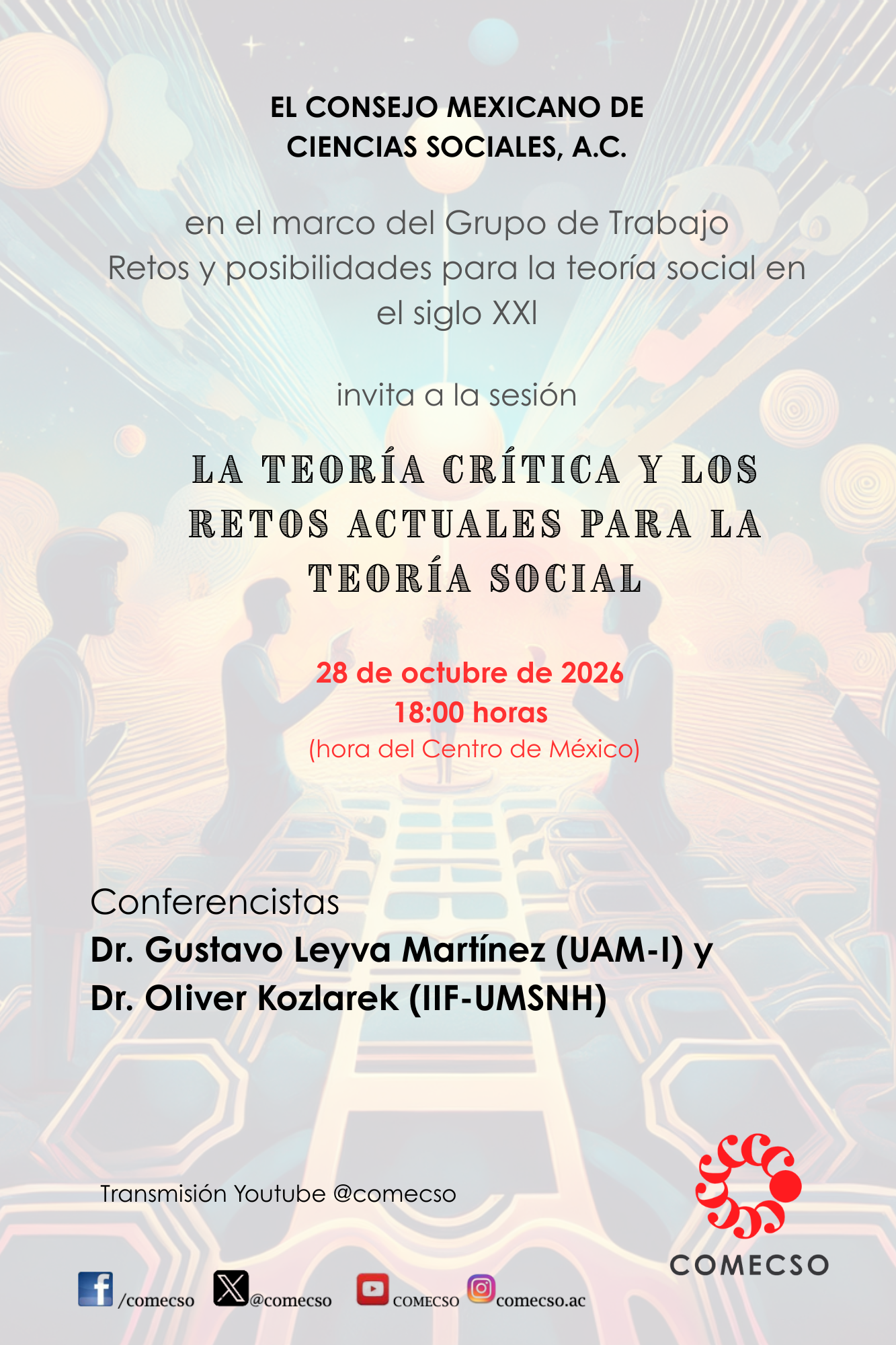
Conferencia La Teoría crítica y los retos actuales para la teoría social
Alejandra Valdés Teja - Oct 07, 2026El Grupo de Trabajo Retos y posibilidades para la teoría social en el siglo XXI invita a conferencia La Teoría crítica…
Talleres virtuales
Laura Gutiérrez - Sep 17, 2026Con el objetivo de transmitir conocimientos y desarrollar habilidades específicas que contribuyan a la práctica docente, la investigación, la innovación,…
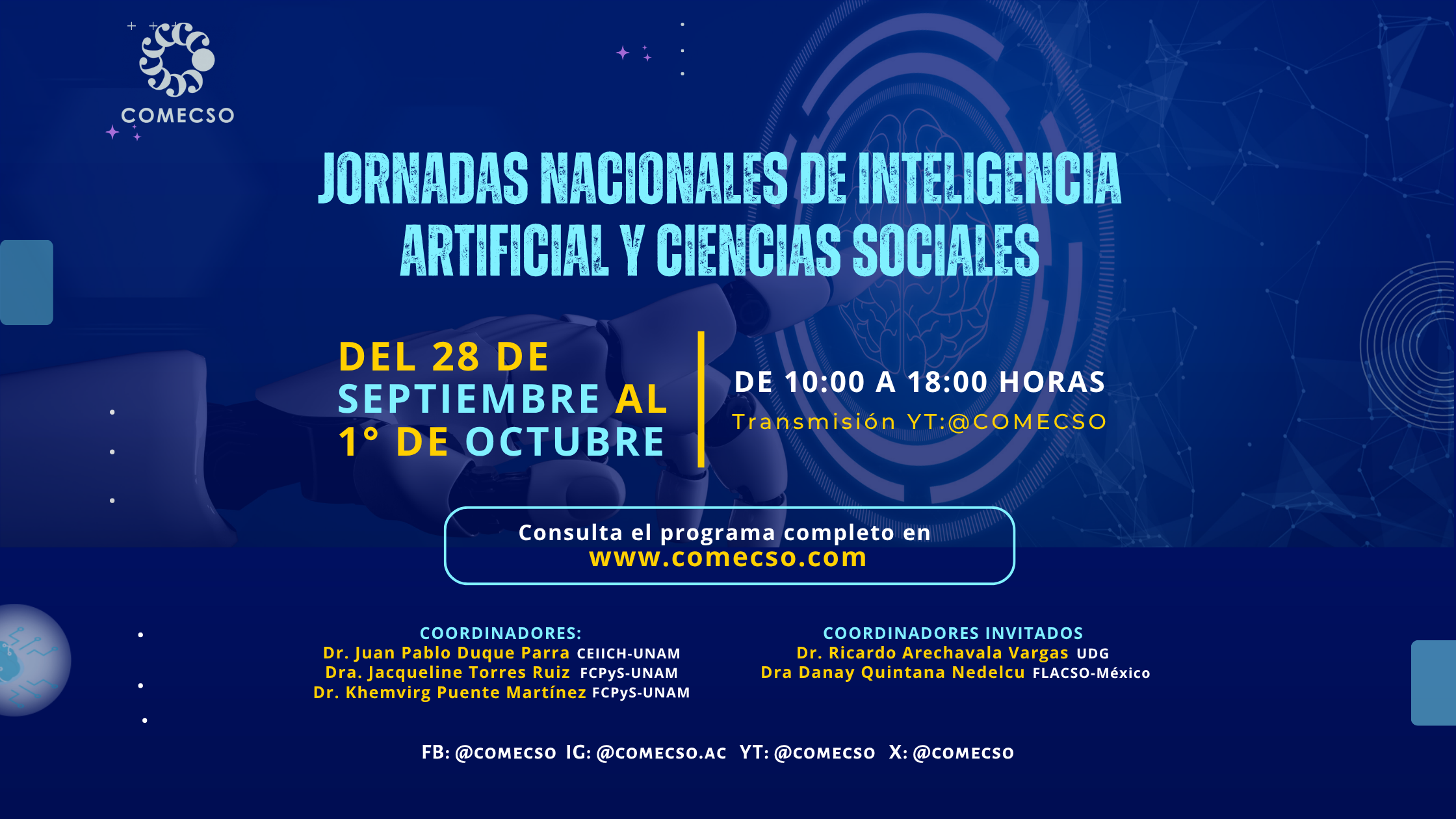
Horizontes de investigación sobre la Inteligencia Artificial desde las Ciencias Sociales
comecso - Sep 14, 2026Coords. Juan Pablo Duque, Khemvirg Puente y Jacqueline Torres-Ruiz Objetivos: Invitar a especialistas de todas las disciplinas de las Ciencias…
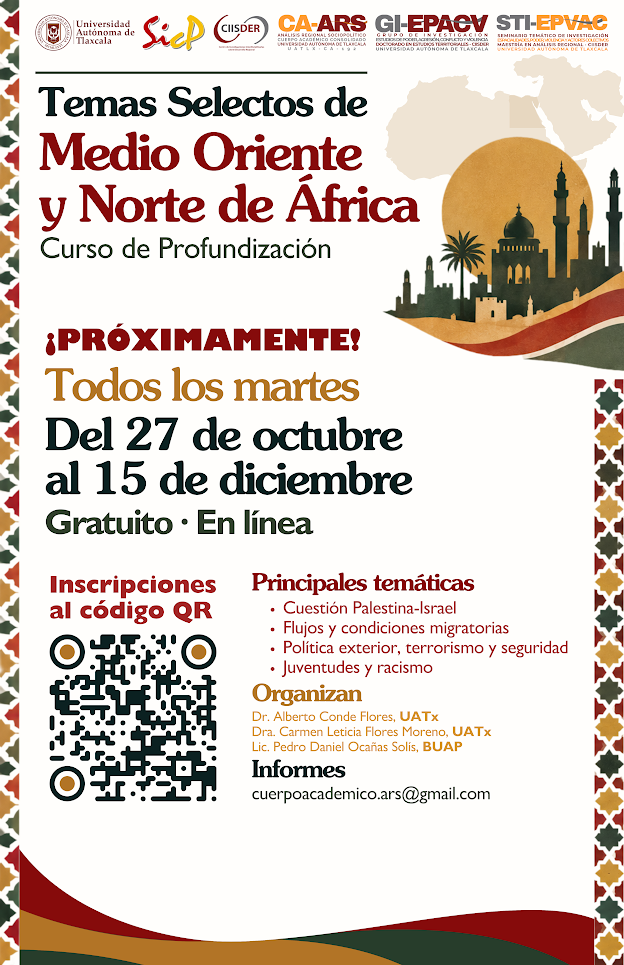
🌍 Temas selectos de Medio Oriente y Norte de África. Curso de profundización
Alejandra Valdés Teja - Oct 16, 2026El Cuerpo Académico Análisis Regional Sociopolítico (CIISDER-UATx) invita a este curso gratuito con especialistas de México, España y Emiratos Árabes…
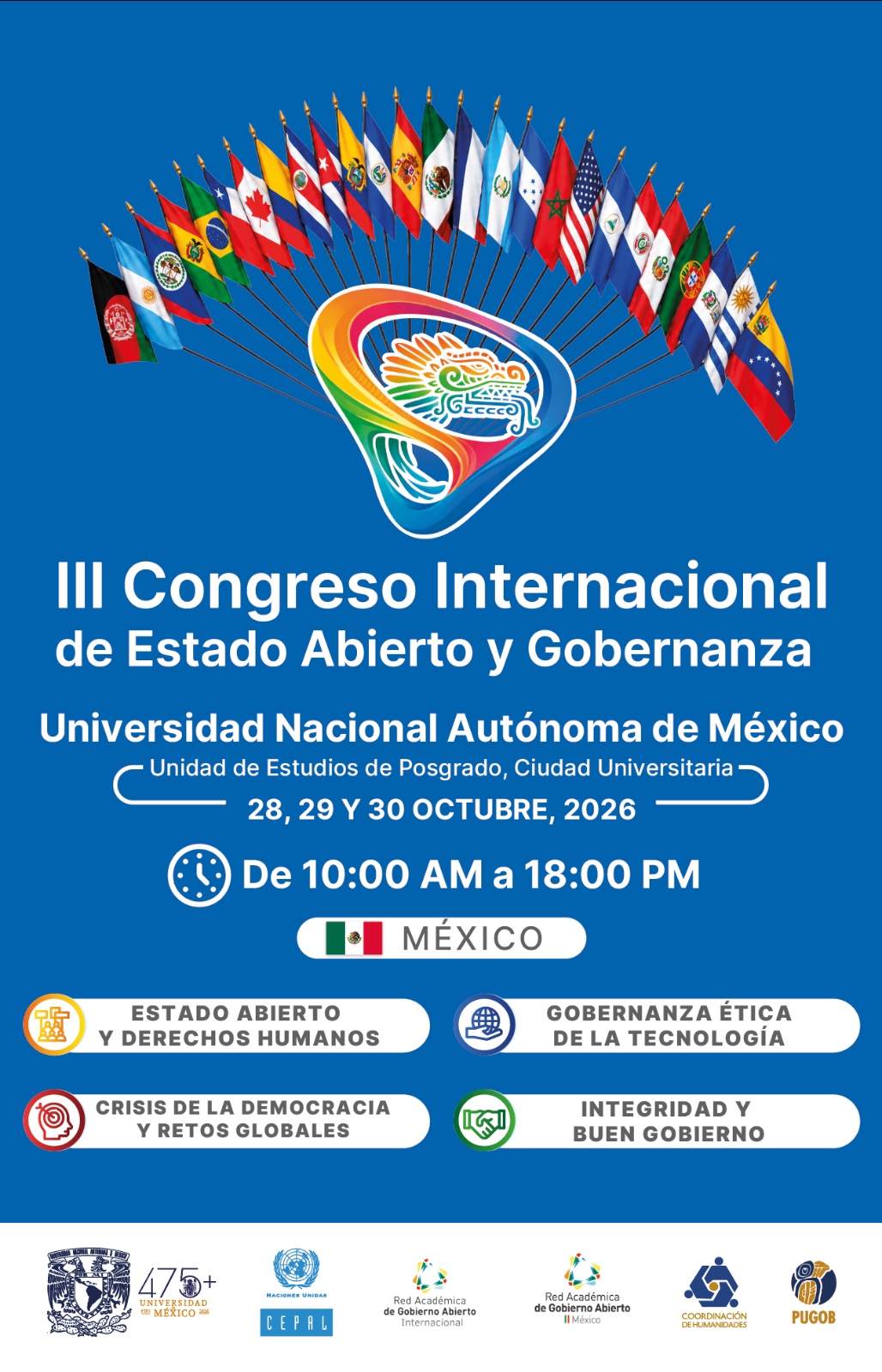
III Congreso internacional de Estado Abierto y Gobernanza
Alejandra Valdés Teja - Oct 16, 202628,29 y 30 de octubre de 10:00 a 18:00 horas. Unidad de Posgrado, Ciudad Universitaria.

Red de cuidados. Avistamiento y dibujo de cuidados interespecie
Alejandra Valdés Teja - Oct 16, 2026Taller organizado en el marco del Mes de los cuidados Red de cuidados. Avistamiento y dibujo de cuidados interespecie 21 de…
Grupos de trabajo
Conferencia La Teoría crítica y los retos actuales para la teoría social
Alejandra Valdés Teja - Oct 07, 2026Horizontes de investigación sobre la Inteligencia Artificial desde las Ciencias Sociales
comecso - Sep 14, 2026Destacadas
El programa de Educación continua del COMECSO invita a sus talleres
Alejandra Valdés Teja - Oct 15, 2026Conferencia La Teoría crítica y los retos actuales para la teoría social
Alejandra Valdés Teja - Oct 07, 2026Horizontes de investigación sobre la Inteligencia Artificial desde las Ciencias Sociales
comecso - Sep 14, 2026🌍 Temas selectos de Medio Oriente y Norte de África. Curso de profundización
Alejandra Valdés Teja - Oct 16, 2026