Special Issue and symposium proposals for Environmental Politics


Special Issue and Symposia, 2023 Call for Proposals
Deadline: 4 March 2022
We invite proposals for a full Special Issue (SI) or a shorter Symposium on a well focused topic of particular interest to the journal’s readership.
Proposal Guidelines
Environmental Politics is committed to publishing high quality Special Issues and Symposia that make a significant and innovative contribution to the field of environmental politics, broadly defined. These guidelines provide information on the proposal and publishing process.
Environmental Politics is committed to the promotion of diversity, equity, and inclusion through the publication of scholarship from diverse voices and epistemologies. To this end, successful proposals must take seriously the diversity of their contributors, including as related to gender, geography, and race/ethnicity. Proposers are also encouraged to include contributions from experienced and early career scholars.
Proposing a Special Issue or Symposium to Environmental Politics
A Special Issue will normally contain 8-10 papers; a Symposium will normally contain 3-5 papers. The journal’s normal word limits for articles (8000 words) apply to all contributions; proposals may include shorter journal formats for papers (“Brief Report,” “Discussion”), when there is a clear rationale for them.
Proposals must provide the following information:
- SI or Symposium Title;
- The name, affiliation, contact details, and a short bio for proposed Guest Editor or Editors (one paragraph each);
- A Table of Contents;
- A description of, and rationale for, the proposed SI or Symposium (500 – 1000 words). This should address its importance, contribution to scholarship in the field, and main methodological approaches. A clear analytical thread and sustained dialogue between papers is integral. To that end, it is valuable to describe any workshops or collaborations that have contributed to the Interdisciplinary dialogue and approaches are also encouraged.
- Explanation of diversity of proposed contributions. How would the SI or Symposium promote diversity, equity, and inclusion? In what ways would it also address a diversity of approaches to understanding the environment or environmental politics?
For each individual contribution, please provide:
- The name, affiliation, contact details, and a short bio for each author (one paragrapheach);
- A summary of the proposed contribution (250-350 words). This summary should clearly set out the paper’s conceptual framework, central argument, methodological approach, and contribution to the state of knowledge in the field;
- A description of the current state of the manuscript, and a realistic estimate of the datewhen it will be ready for peer review.
Peer review
All contributions will be evaluated through double-blind peer review, using the journal’s Editorial Manager submission platform, and must meet the journal’s normal, high standards. The Guest Editor(s) will be primarily responsible for organizing and managing peer review. One of the journal’s Editors will act as liaison with the Guest Editor(s) and provide editorial oversight of the peer review process. Final acceptance of all submissions is by the Editor-in-Chief, upon recommendation of Guest Editor(s). More detailed instructions will be provided upon acceptance of a proposal.
It is unlikely that all papers will survive peer review. Guest Editors should not raise expectations that acceptance of a proposal means that any given paper will be published; proposals should also take the likelihood that some papers will be rejected into account when deciding on the number of contributions to include.
Publication and Style
Shortly after acceptance for publication, individual papers will be published online. However, due to the volume of standard submissions we receive, there is frequently a delay of six to nine months after the acceptance of all papers before the Special Issue or Symposium is published as a collection.
Following publication, Special Issues may also be published in book form by Routledge; the final decision rests with Routledge book editors. To accommodate this, Guest Editor(s) and authors should avoid referring to contributions as ‘articles / chapters / papers.’
Authors should use first person and the active voice wherever possible. Authors may use either British English or US English spelling as long as one form is used consistently throughout the contribution; see “Instructions for Authors” for further style requirements.
Submission
Proposals will be evaluated by a special committee of the Editorial Advisory Board, which is chaired this year by Graeme Hayes.
Proposals should be sent via email to hayesga@aston.ac.uk by Friday 4 March 2022.


Te puede interesar

El programa de Educación continua del COMECSO invita a sus talleres
Alejandra Valdés Teja - Oct 15, 2026Cartografía social-pedagógica: producir conocimiento y repensar el territorio desde la educación Imparte: Laura Eugenia Alejandri Rábago Descripción Este taller ofrece…
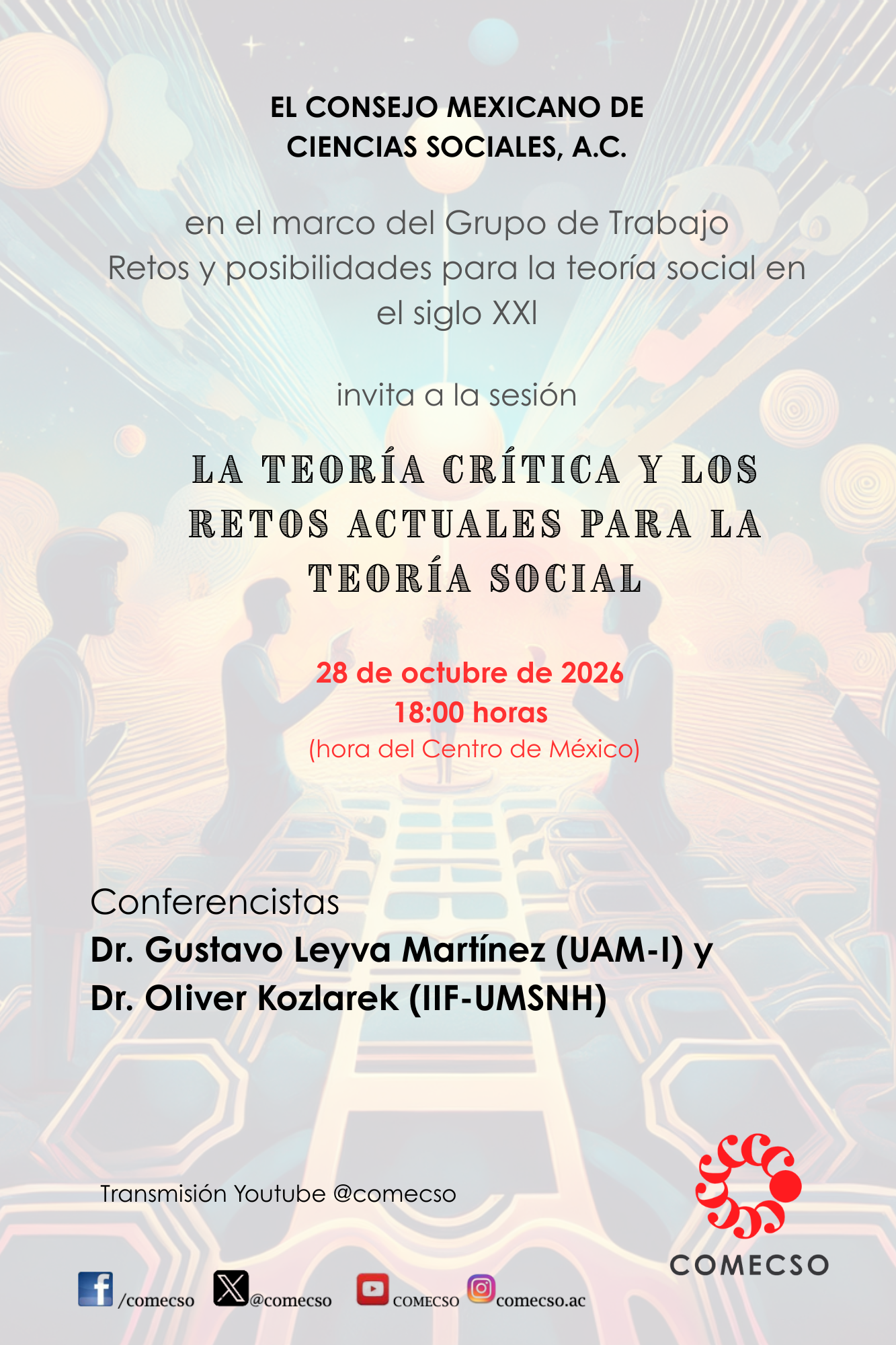
Conferencia La Teoría crítica y los retos actuales para la teoría social
Alejandra Valdés Teja - Oct 07, 2026El Grupo de Trabajo Retos y posibilidades para la teoría social en el siglo XXI invita a conferencia La Teoría crítica…

Talleres virtuales
Laura Gutiérrez - Sep 17, 2026Con el objetivo de transmitir conocimientos y desarrollar habilidades específicas que contribuyan a la práctica docente, la investigación, la innovación,…

Horizontes de investigación sobre la Inteligencia Artificial desde las Ciencias Sociales
comecso - Sep 14, 2026Coords. Juan Pablo Duque, Khemvirg Puente y Jacqueline Torres-Ruiz Objetivos: Invitar a especialistas de todas las disciplinas de las Ciencias…
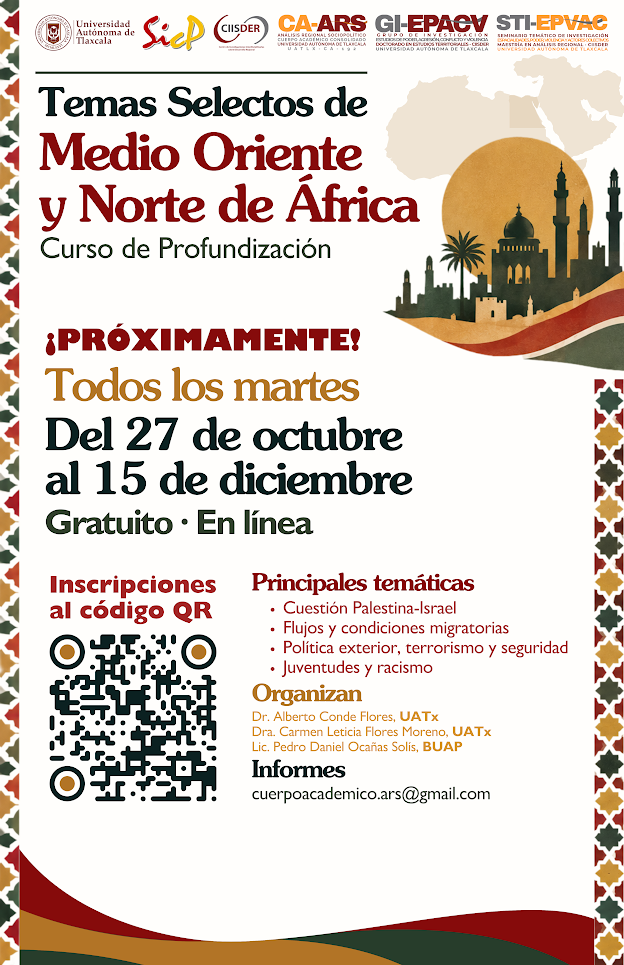
🌍 Temas selectos de Medio Oriente y Norte de África. Curso de profundización
Alejandra Valdés Teja - Oct 16, 2026El Cuerpo Académico Análisis Regional Sociopolítico (CIISDER-UATx) invita a este curso gratuito con especialistas de México, España y Emiratos Árabes…
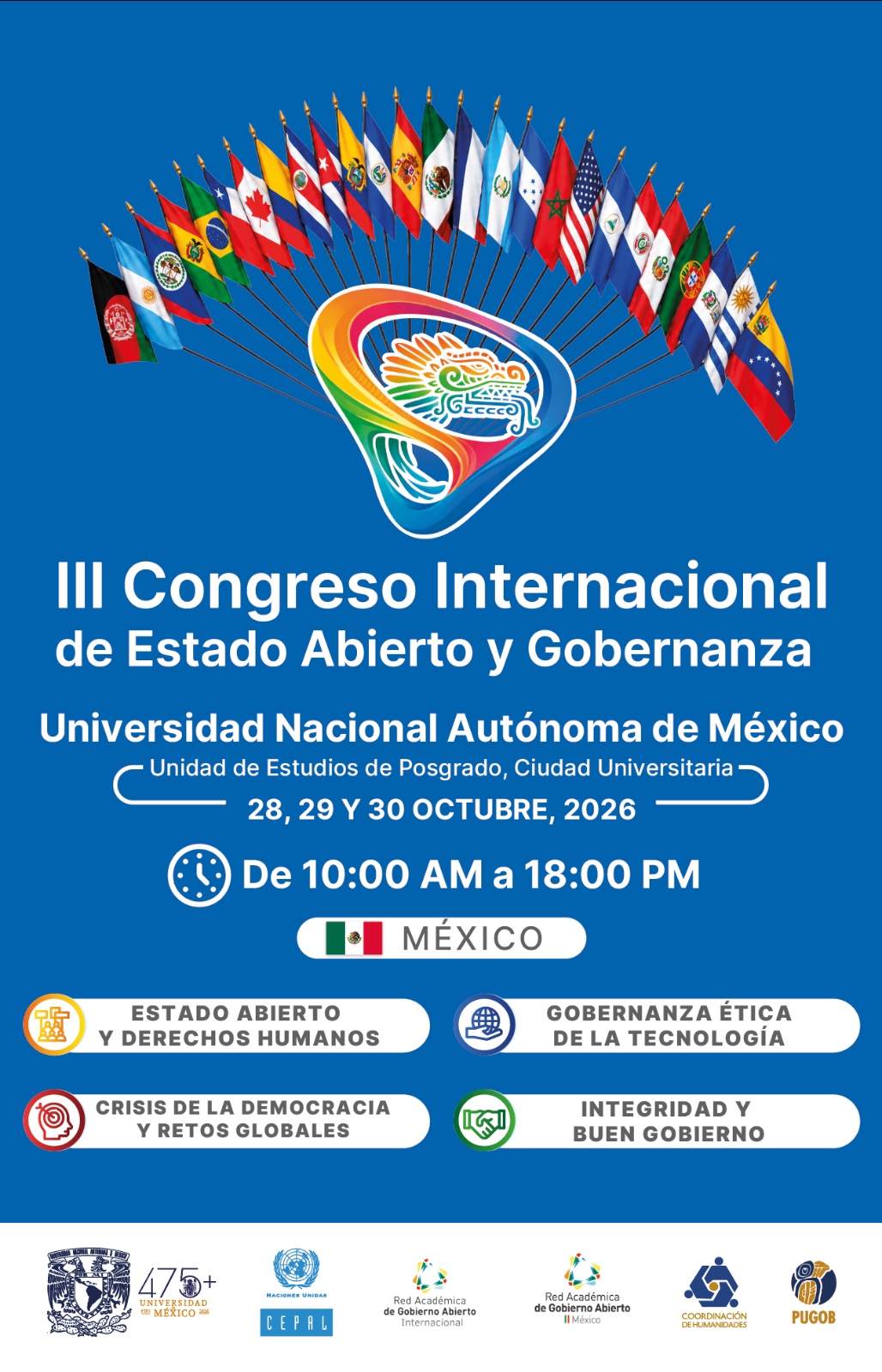
III Congreso internacional de Estado Abierto y Gobernanza
Alejandra Valdés Teja - Oct 16, 202628,29 y 30 de octubre de 10:00 a 18:00 horas. Unidad de Posgrado, Ciudad Universitaria.
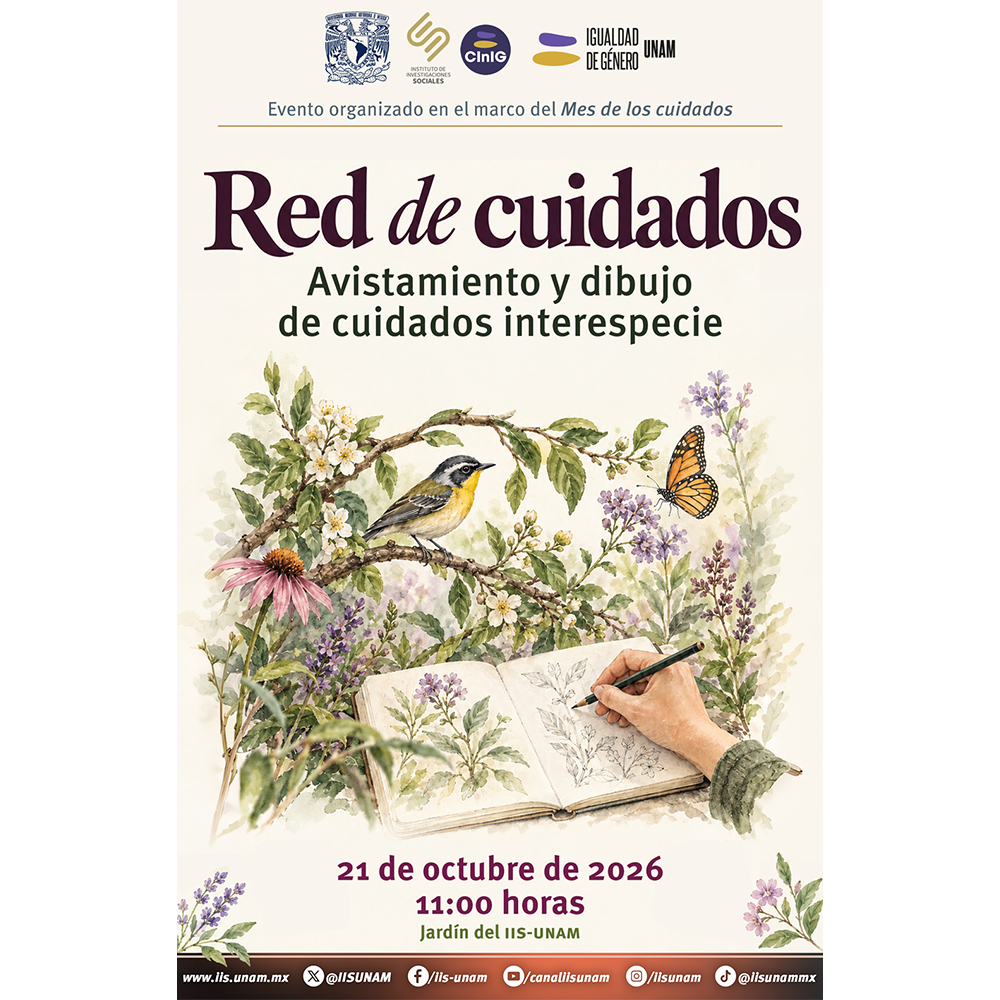
Red de cuidados. Avistamiento y dibujo de cuidados interespecie
Alejandra Valdés Teja - Oct 16, 2026Taller organizado en el marco del Mes de los cuidados Red de cuidados. Avistamiento y dibujo de cuidados interespecie 21 de…
Grupos de trabajo
Conferencia La Teoría crítica y los retos actuales para la teoría social
Alejandra Valdés Teja - Oct 07, 2026Horizontes de investigación sobre la Inteligencia Artificial desde las Ciencias Sociales
comecso - Sep 14, 2026Destacadas
El programa de Educación continua del COMECSO invita a sus talleres
Alejandra Valdés Teja - Oct 15, 2026Conferencia La Teoría crítica y los retos actuales para la teoría social
Alejandra Valdés Teja - Oct 07, 2026Horizontes de investigación sobre la Inteligencia Artificial desde las Ciencias Sociales
comecso - Sep 14, 2026🌍 Temas selectos de Medio Oriente y Norte de África. Curso de profundización
Alejandra Valdés Teja - Oct 16, 2026