Social Movements. Paul Almeida

Social Movements
The Structure of Collective Mobilization
Paul Almeida
One pattern emerging in the new millennium involves ordinary people mobilizing around increasingly negative conditions. When we observe some of the largest protest campaigns of the past twenty years, they are clearly driven by worsening situations.
- The largest single day of global protest in world history occurred on February 15, 2003 as an anti-war action to prevent the impending US invasion and war in Iraq. Some 700 cities (and 10 to 15 million people) worldwide participated in the simultaneous mobilizations denouncing the imminent military offensive.
- The massive 2006 immigrant rights protests in the United States broke records in dozens of towns and cities as the largest street demonstrations ever taking place. The immigrant rights mobilizations centered on stopping punitive legislation passed by the US House of Representatives that would make undocumented residence a felony.
- The 2017 Women’s March organizers incorporated several perceived harms to existing protections, rights, health, and safety in relation to the arrival of the Trump administration in their mission statement. The Women’s March successfully converted these intersectional mobilization appeals into the largest synchronized rallies and marches in U.S. history with a reported 4 to 5 million participants (and repeated these efforts in 2018 and 2019).

Costa Rica, November 2015, protest for climate justice. Copyright Paul Almeida.
- Perhaps the most ominous issue of all comes with planetary warming and climate change. Global warming has also produced the most extensive transnational movement in human history by promoting climate justice and a dramatic reduction in greenhouse gases. Environmental activists and scientists now coordinate the international climate justice movement in nearly every nation and have effectively mobilized millions of people in annual campaigns to pressure their respective governments and political leaders to act.
Forms of Threat
 Social movement scholars refer to such negative circumstances motivating collective action as “threats.” As the evidence above suggests, threats appear to be driving the largest social movement campaigns of the twenty-first century. In my new book, Social Movements: The Structure of Collective Action, I give extended attention to the way various forms of threat influence the rise of social movements over the past two decades, their diffusion, and, most important, the final outcomes (i.e., success or failure). In this work, threats are classified into economic, political, repressive, and environmental forms. Economic threats refer to the deteriorating material conditions of life experienced by communities and groups. They are responsible for triggering contemporary movements in the United States such as Occupy Wall Street, the Fight for $15 fast food worker strikes, living wage campaigns, and the recent teachers’ strikes in West Virginia and Los Angeles. Economic threats have also catalyzed major protest campaigns against austerity and public sector privatization in southern Europe and throughout the global South.
Political threats center on the loss of rights. The rise of authoritarian populism around the globe over the past five years has placed vulnerable populations and progressive social sectors on alert. The Women’s Marches and ensuing nation-wide mobilizations by the “Resistance” and Indivisible (e.g., over the “Muslim ban”; refugee family separation; attempts at terminating the Affordable Care Act, DACA, TPS, etc.) are largely a response to potential losses in constitutional and legal protections. Civil society campaigns against fraudulent elections and governmental corruption also fall under political threat-induced collective action.
Repressive threats involve physical harms to safety. The Black Lives Matter movement (BLM) arose out of police brutality and police killings of African American citizens and the subsequent impunity of the departments involved. Mass resistance has also been motivated by repressive actions by national governments as recent examples in Sudan, Burma, Honduras, and Nicaragua demonstrate. When repressive state actions against nonviolent movements continue over a prolonged period, the repressive threats may even radicalize the movement as observed in some of the Arab Spring uprisings.
While the peril of climate change and global warming appears as the largest environmental threat, local-based environmental justice battles occur throughout North America and the world. In the United States, these conflicts often involve environmental disparities, whereby majority non-white and low-income communities receive a disproportionate amount of pollution, environmental hazards, and costs. While many of these local struggles against environmental threats remain below the radar of national public awareness, the latest cases of lead poisoning in Flint, Michigan and the construction of the Dakota Access Pipeline (DAPL) on indigenous people’s lands have shown the exemplary character of everyday people attempting to reclaim the ecological health and sustainability of their communities via defiant collective action campaigns. Hundreds of similar defensive campaigns over environmental threats occur across Asia, Africa, and Latin America over mining, mega-development projects, and the rapid expansion of bio-fuel crops.
Final Thoughts on Mobilizing
All of these threat-induced social movements require a minimum organizational or coordinating structure to launch and maintain their campaigns. The new internet communications technologies, especially social media (SMS/Texting, Twitter, WhatsApp, Tumblr, Facebook, Instagram, etc.) have played an integral role in every movement mentioned above, and several of these mobilizations have broken records for their size and scope. As the first quarter of the twenty-first century rapidly unfolds, the social movement path to preventing and turning back mounting threats may be one of our most promising avenues for change. At the same time, organizers strive to sustain many of the tremendous mobilizations that at times display a “flash activism” character by only lasting for a few days or less, even though they may be large in terms of numbers of participants and geographical scale. More strategic discussions should contemplate and debate balancing digital activism with more traditional face-to-face forms of solidarity relationships and capacity building across neighborhoods and communities in order to build enduring and efficacious movements.
[Texto tomado de University of California Press]
Features include:
- use of real data collected in the U.S. and around the world
- the emphasis on student learning outcomes
- case studies that bring social movements to life
- examples of cultural repertoires used by movements (flyers, pamphlets, event data on activist websites, illustrations by activist musicians) to mobilize a group
- topics such as immigrant rights, transnational movement for climate justice, Women’s Marches, Fight for $15, Occupy Wall Street, Gun Violence, Black Lives Matter, and the mobilization of popular movements in the global South on issues of authoritarian rule and neoliberalism
With this book, students deepen their understanding of movement dynamics, methods of investigation, and dominant theoretical perspectives, all while being challenged to consider their own place in relation to social movements.
Paul Almeida is Professor and Chair of Sociology at the University of California, Merced. He is a two-time Fulbright Fellowship Recipient and received the 2015 Distinguished Scholarship Award from the Pacific Sociological Association.
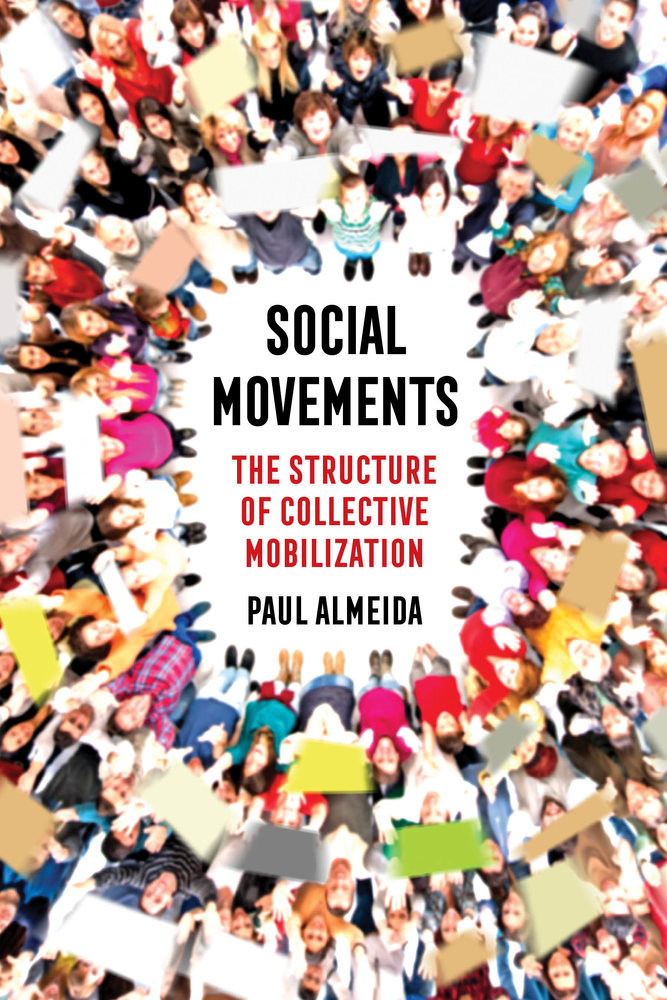
Social Movements. Paul Almeida


Te puede interesar
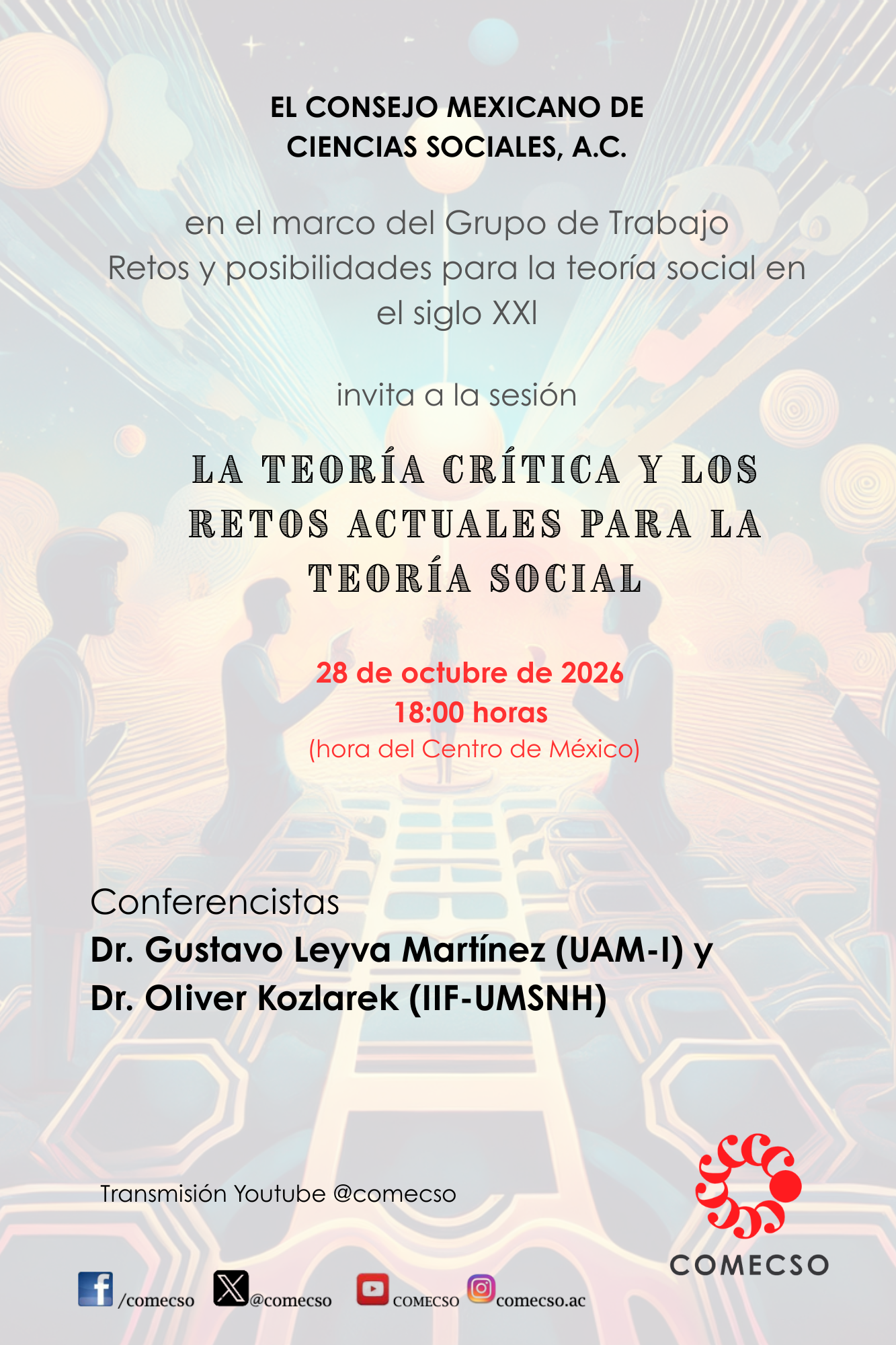
Conferencia La Teoría crítica y los retos actuales para la teoría social
Alejandra Valdés Teja - Oct 07, 2026El Grupo de Trabajo Retos y posibilidades para la teoría social en el siglo XXI invita a conferencia La Teoría crítica…

COMECSO felicita a la Dra. Gisela Zaremberg
Alejandra Valdés Teja - Oct 07, 2026
COMECSO felicita a la Dra. María Regina Martínez Casas
comecso - Sep 30, 2026
Talleres virtuales
Laura Gutiérrez - Sep 17, 2026Con el objetivo de transmitir conocimientos y desarrollar habilidades específicas que contribuyan a la práctica docente, la investigación, la innovación,…

Horizontes de investigación sobre la Inteligencia Artificial desde las Ciencias Sociales
comecso - Sep 14, 2026Coords. Juan Pablo Duque, Khemvirg Puente y Jacqueline Torres-Ruiz Objetivos: Invitar a especialistas de todas las disciplinas de las Ciencias…

Diplomado en Estudios sobre América del Norte
Alejandra Valdés Teja - Oct 08, 2026Nueva edición del Diplomado en Estudios sobre América del Norte que se llevará a cabo del 13 de febrero al…

BOLETÍN CIALC # 297
Alejandra Valdés Teja - Oct 08, 2026El Boletín CIALC de esta semana trata acerca del fascismo en América Latina. En los textos seleccionados se analizan temas como…

9o. Coloquio Difusión y Preservación de Fondos Antiguos «Patrimonio documental siniestrado».
Alejandra Valdés Teja - Oct 08, 2026Consulta el programa aquí
Grupos de trabajo
Conferencia La Teoría crítica y los retos actuales para la teoría social
Alejandra Valdés Teja - Oct 07, 2026Horizontes de investigación sobre la Inteligencia Artificial desde las Ciencias Sociales
comecso - Sep 14, 2026Destacadas
Conferencia La Teoría crítica y los retos actuales para la teoría social
Alejandra Valdés Teja - Oct 07, 2026Horizontes de investigación sobre la Inteligencia Artificial desde las Ciencias Sociales
comecso - Sep 14, 2026