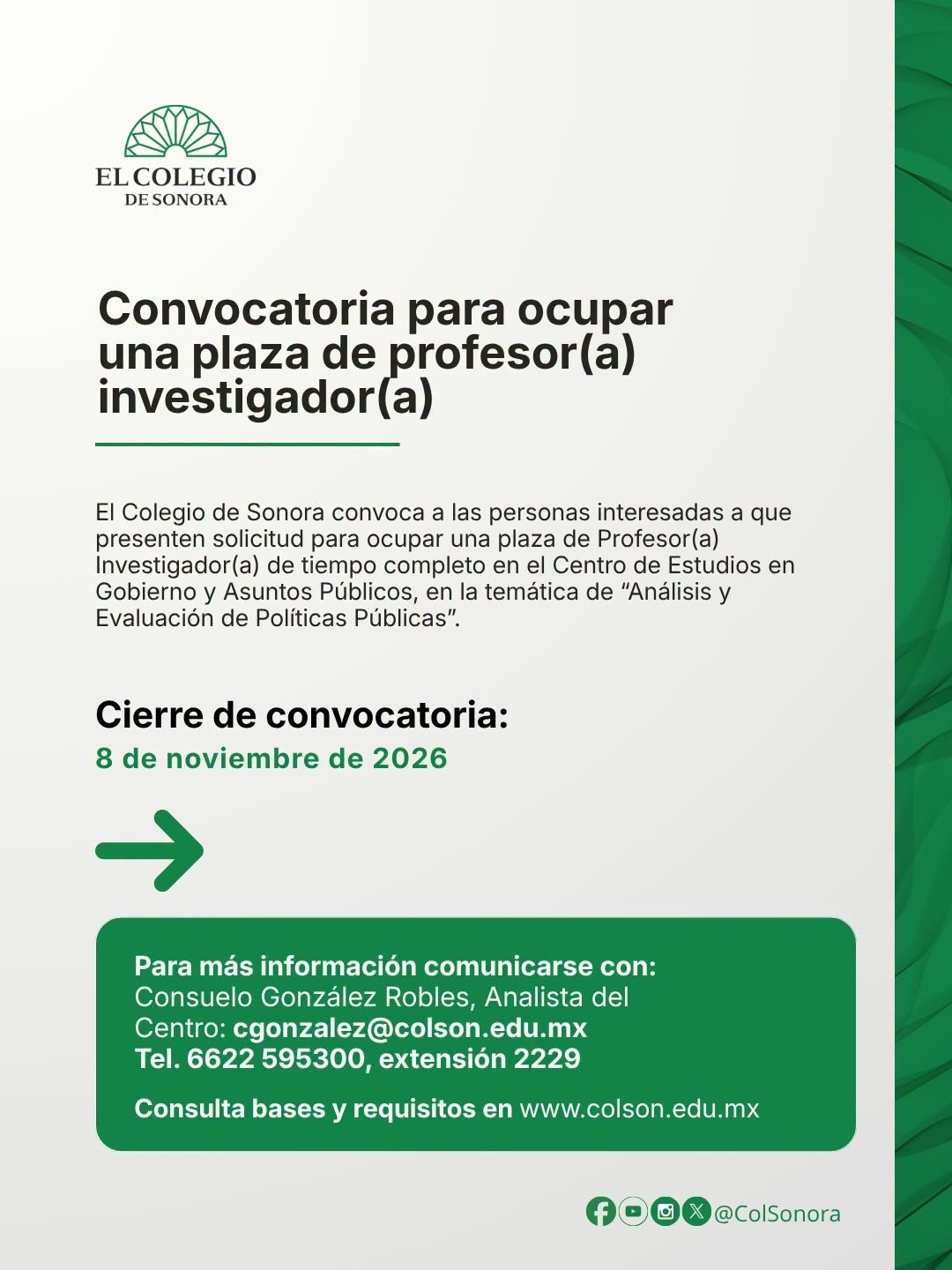
Medical Border Control: How Healthcare Shapes Illegality
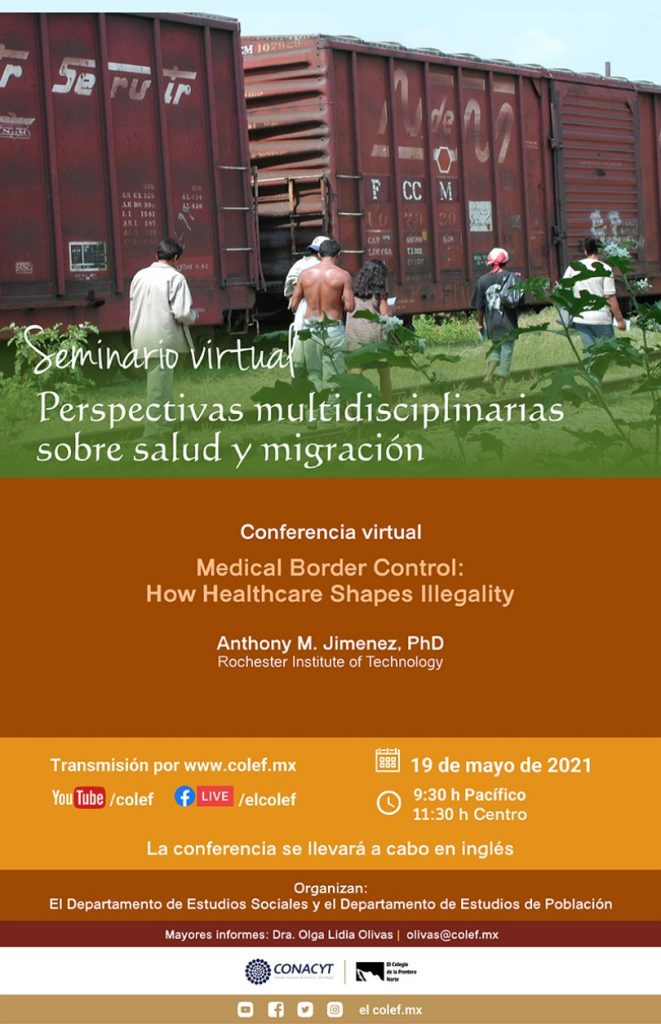

Seminario virtual Perspectivas multidisciplinarias sobre salud y migración
Medical Border Control: How Healthcare Shapes Illegality
Anthony M. Jimenez
PhD Rochester Institute of Technology
Over 11 million undocumented immigrants reside in the United States today, all of whom are ineligible for healthcare coverage. I examine how undocumented immigrants receive care, if at all, and how their illegality is both a social determinant of and determined by health disparities. This research is grounded in 11 months of ethnography at a volunteer-run NGO based in Houston, Texas that provides free food, clothing, basic medical services and temporary shelter to hundreds of undocumented immigrants from Latin America, Africa, and Asia each year.
While previous research has attended to how the healthcare system in the U.S. reinforces the terms of border legality, I focus on how it regulates and shapes migrants’ illegality, and by extension, exploitability. I center my analysis on three state-sanctioned border control operations – denial, detention, and deportation. I discuss (1) the bureaucratic mechanisms set in place to deny undocumented migrants basic medical care; (2) the function of informal, medically unaccredited personal care homes in detaining the most ill; and (3) the ways in which the medical district facilitates migrants’ erasure from the US nation-state (i.e., deportation by death). Synergizing the theoretical contributions of medical sociologists and immigration scholars, my research illustrates how the US healthcare system and border control not only work hand-in-hand but also strengthen one another.
Anthony Jimenez
Is an Assistant Professor of Sociology at Rochester Institute of Technology. He grew up along the US-Mexico border in El Paso, Texas and completed his doctoral program at the University of Minnesota. His research, supported in part by the Ford Foundation, focuses on border imperialism and the intersections between immigration and healthcare. In his prospective research, Anthony will explore how COVID-19 has shaped migrants’ home health options and experiences.


Te puede interesar
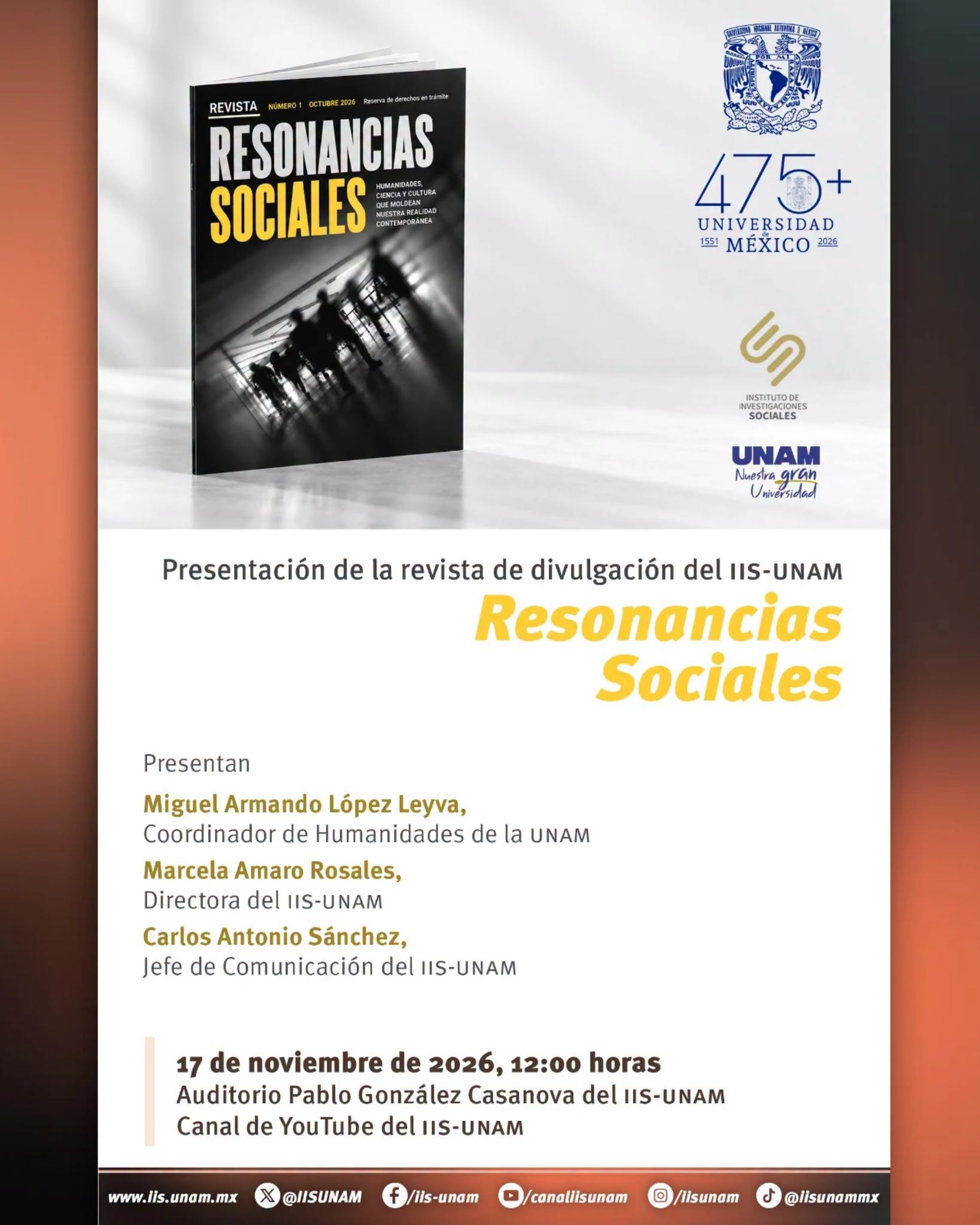
presentación de Resonancias Sociales, revista de divulgación del Instituto de Investigaciones Sociales de la UNAM
comecso.merida - Oct 21, 2026El COMECSO invita a la presentación de Resonancias Sociales, revista de divulgación del Instituto de Investigaciones Sociales de la UNAM:…
Talleres virtuales
Laura Gutiérrez - Sep 17, 2026Con el objetivo de transmitir conocimientos y desarrollar habilidades específicas que contribuyan a la práctica docente, la investigación, la innovación,…

Diplomado Internacional «Turismo, espacios y culturas en transformación», tercera edición
comecso.merida - Nov 24, 2026El CIESAS Peninsular, el Ix El CIESAS Peninsular, el IIA-UNAM, la UADY, el CEMCA y Alba Sud, entre otras instituciones,…
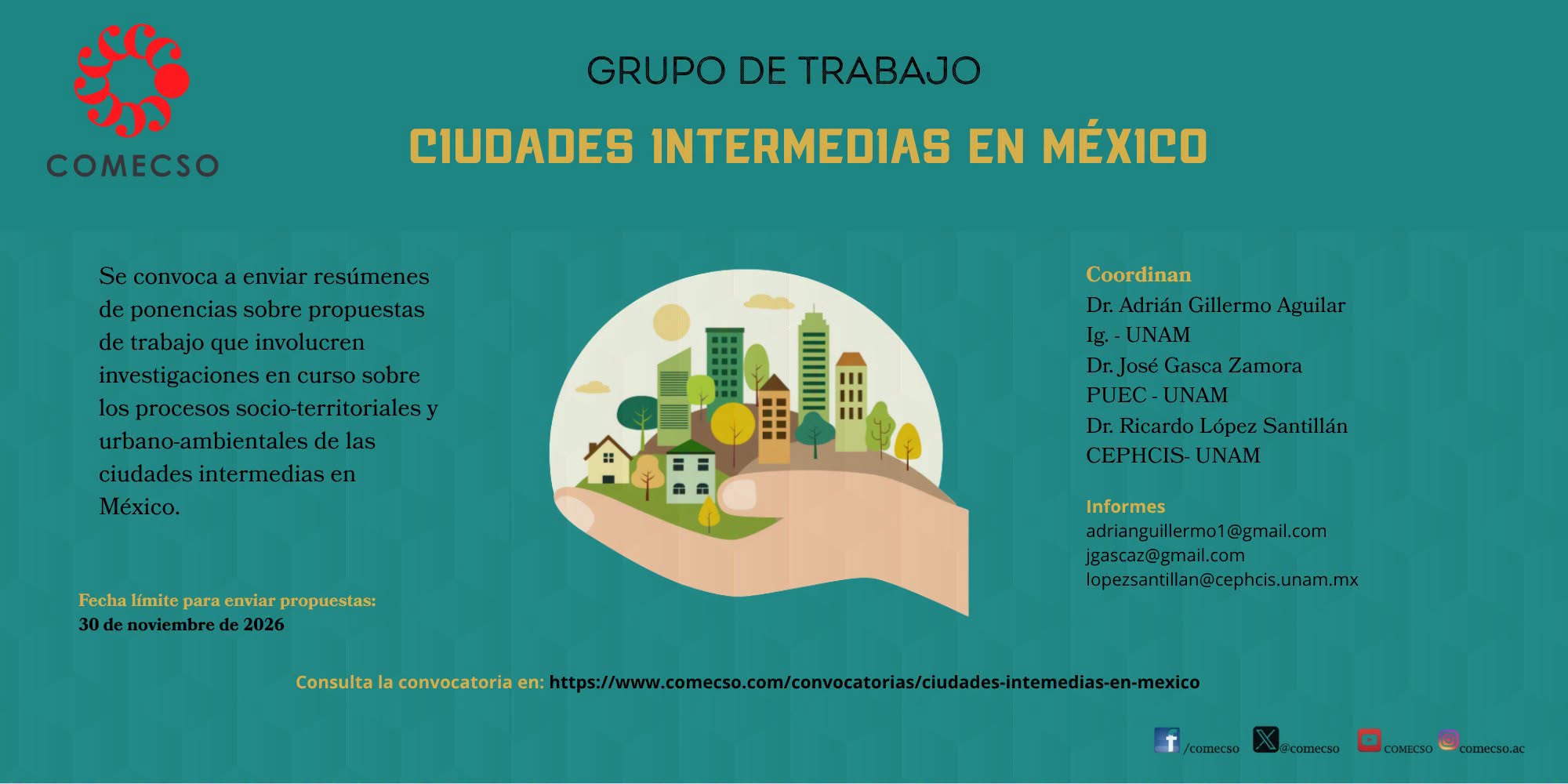
Última semana para enviar propuestas al GT Ciudades intermedias en México
comecso.merida - Nov 23, 2026Última semana para enviar propuestas al GT Ciudades intermedias en México El 30 de noviembre de 2026 cierra la convocatoria…
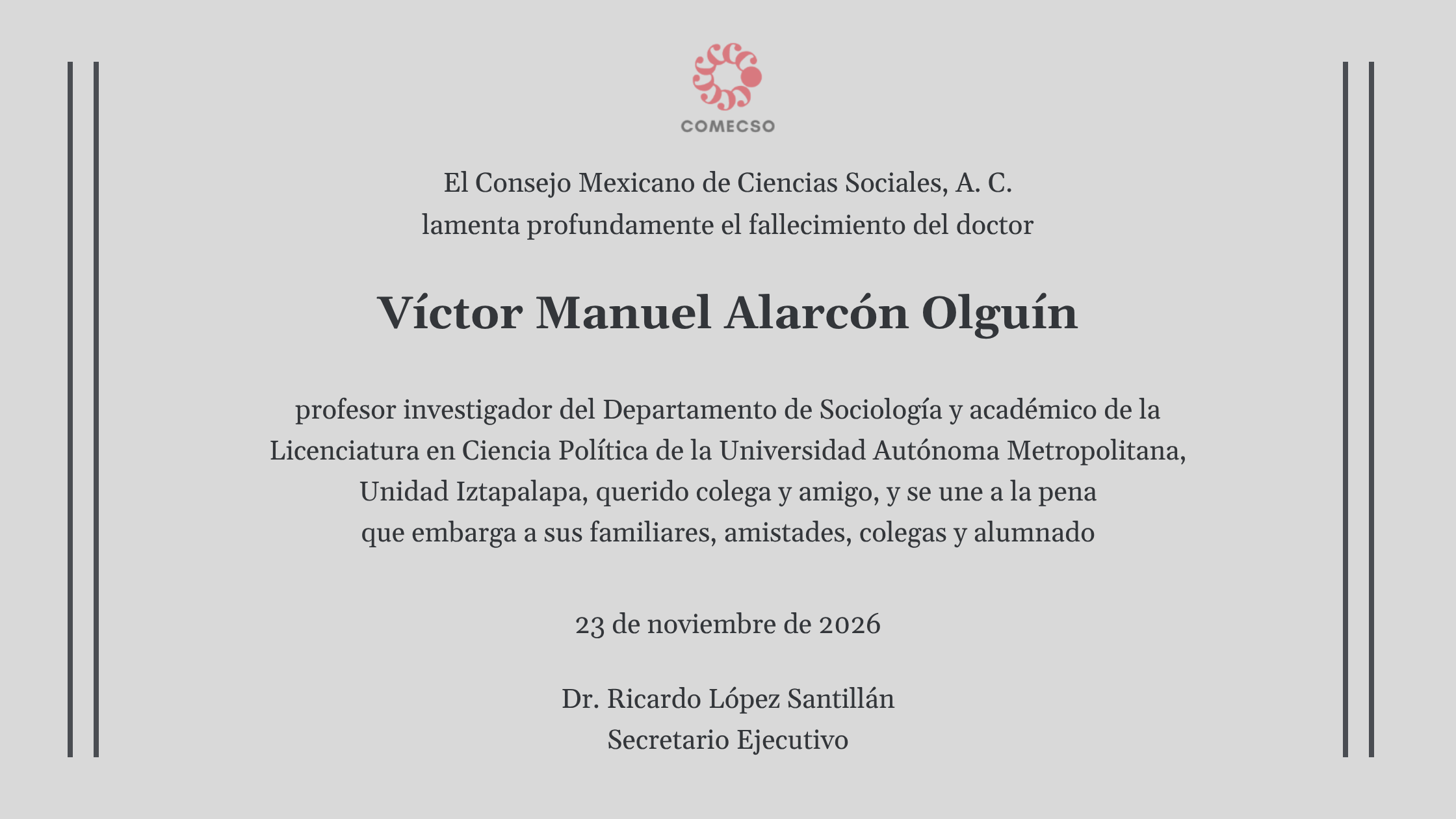
El Consejo Mexicano de Ciencias Sociales lamenta el fallecimiento del Dr. Víctor Manuel Alarcón Olguín
comecso.merida - Nov 23, 2026El Consejo Mexicano de Ciencias Sociales lamenta profundamente el fallecimiento del Dr. Víctor Manuel Alarcón Olguín, ocurrido el 22 de…
Grupos de trabajo
Última semana para enviar propuestas al GT Ciudades intermedias en México
comecso.merida - Nov 23, 2026
Seminario Metrópolis e Innovación Urbana Ciclo «La acción metropolitana en México. Perspectivas, tendencias y desafíos» Sesión: Zona Metropolitana de Mérida
comecso.merida - Nov 05, 2026Destacadas
presentación de Resonancias Sociales, revista de divulgación del Instituto de Investigaciones Sociales de la UNAM
comecso.merida - Oct 21, 2026Diplomado Internacional «Turismo, espacios y culturas en transformación», tercera edición
comecso.merida - Nov 24, 2026Última semana para enviar propuestas al GT Ciudades intermedias en México
comecso.merida - Nov 23, 2026