What Intersectionality Does to Activism


What Intersectionality Does – or Does not Do – to Activism
French Association of Political Science (AFSP)
15th National Conference
Sciences Po Bordeaux, France
July 2-4, 2019
Despite the increase of organizations claiming its mantel, studies on the political uses of intersectionality have been too few and far between. The present panel aims to redress this situation. It will focus on what intersectionality does – or does not do – to activism, and on what in return activism does to the framework itself. Another goal of this panel is to bring into the conversation disciplines that rarely get to interact within francophone social sciences but that are nonetheless thriving, namely social movement-, gender-, and postcolonial studies as well as political sociology.
Call for Papers
The present panel welcomes papers on any kind of activist practice taking place in any national, cross-national or international context and that adopt methodologies specific to social sciences and to political theory. The panel will focus on two key research areas:
- Activist appropriations of intersectionality: a sociological enquiry
A first line of inquiry will center on how intersectionality is used politically, how it has developed over time and expanded in different physical and social spaces and national or cross-national contexts (Fassin, 2015). Using the tools provided by the social history of political ideas (Hauchecorne and Matonti, 2017), contributions will investigate how the notion has and continues to spread, examine the key actors who contribute to its circulation, and identify the specific conditions supporting its reception. While such a project has already been undertaken within a North-American context, it has yet to be tackled within a French framework.
Growing out of academia, intersectionality has since been adopted by social movements (Larcher 2017). But what happened within the French context? Who are the actors driving this shift? In which ways are they connected to academia? Which activist groups and networks are responsible for this translation? How differently is intersectionality received in the activist circles that have adopted it, mostly the feminist and anti-racist movements? One could also examine the spaces where the notion has not taken hold. For example, why haven’t political parties embraced it? Left-wing parties seem at first better positioned to receive and then disseminate the concept, yet to this day they have barely contributed to its diffusion (Keucheyan, 2017).
- From theory to praxis: the activist production of intersectionality
A second line of inquiry will investigate social-movement organizations and the actions they produce and support. Which sociological tools can be used to analyze the different groups claiming to be intersectional? Where do these groups position themselves within the social movement arena? What activist practices does the term “intersectionality” actually encompass? How do these actions fit within established repertoires of contention? Do they alter or disrupt the groups’ internal power dynamics or political stance?
In the late 1960s feminist mobilizations demonstrated the critical role exclusive, women-only meeting spaces could play in liberating women’s voices and raising political consciousness (Jacquemart et Masclet, 2017). Too few sociological studies have examined how intersectionality is produced and performed and whether it leads to further empowerment within other activist subcultures (see however Germain and Larcher, 2018). How do groups and collectives manage to handle and acknowledge multi-layered oppressions? Are some deemed worthier than others? Does claiming intersectionality necessarily result in splitting all causes and fragmenting the different political struggles?
This panel will also consider the methodological challenges researchers face – to enter the field or conduct fieldwork– when they acknowledge that race, class and gender are always imposed in concrete context (Mazouz 2015). The intersectional paradigm can indeed fuel scientific investigations and methodologies beyond groups and actors claiming it (Dunezat et Picot, 2017). Should academics adopt the same tools of enquiry to study groups that claim intersectionality and to research those who ignore or reject it (Avanza et Della Sudda, 2017)?
Paper submissions (in English or French) should be no longer than 500 words. They should indicate the main material and bibliographical references used and include a brief biography of their authors. They should be sent to the organizers by December 12, 2018 at the following address: clement.petitjean@uvsq.fr.
Organizing committee:
Clément Petitjean, UVSQ / Printemps (UMR 8085)
Julien Talpin, Lille 2 / CERAPS (UMR 8026)
Charlotte Thomas Hébert, Paris 1 / CESSP (UMR 8029)


Te puede interesar

El programa de Educación continua del COMECSO invita a sus talleres
Alejandra Valdés Teja - Oct 15, 2026Cartografía social-pedagógica: producir conocimiento y repensar el territorio desde la educación Imparte: Laura Eugenia Alejandri Rábago Descripción Este taller ofrece…
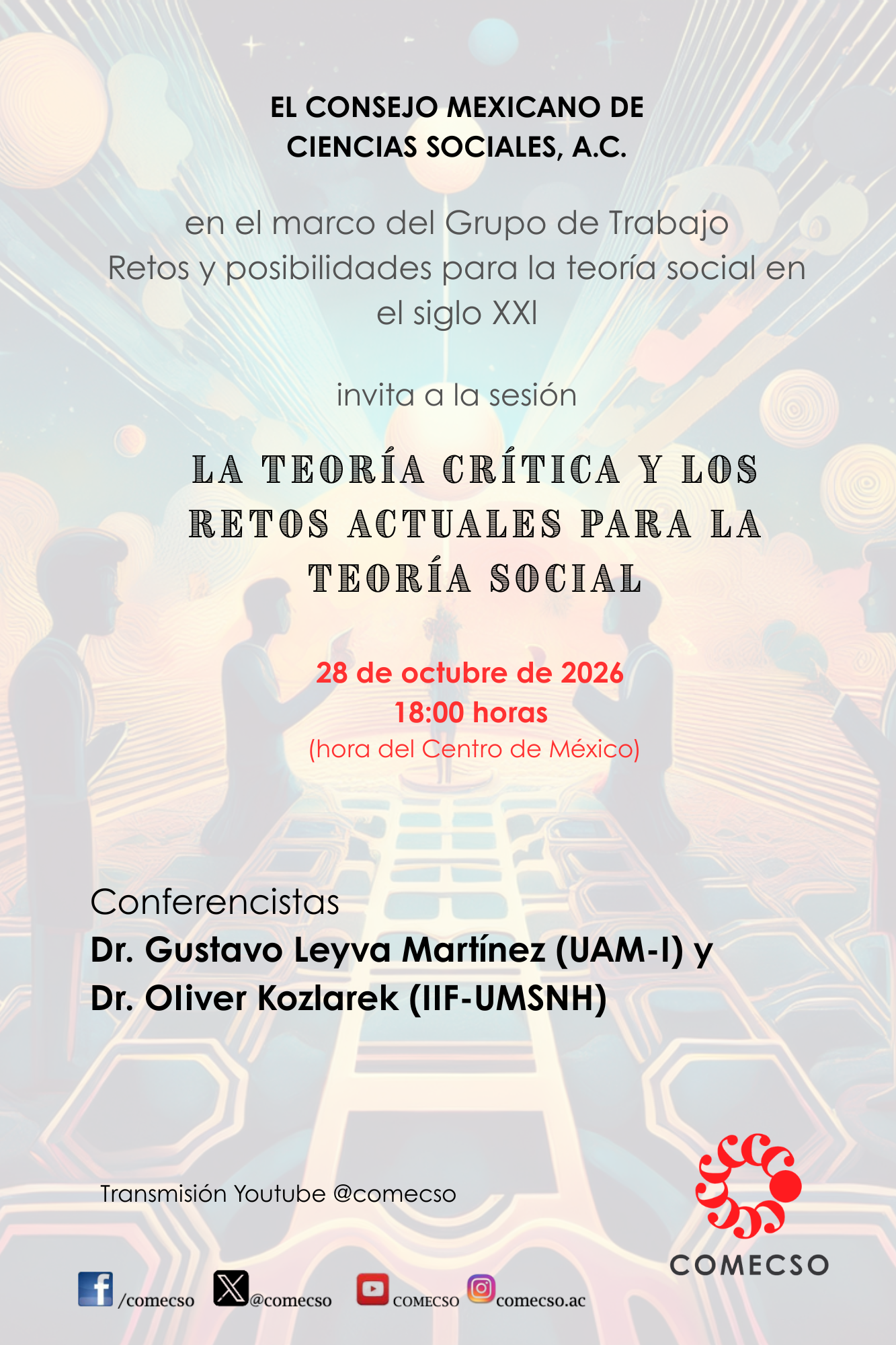
Conferencia La Teoría crítica y los retos actuales para la teoría social
Alejandra Valdés Teja - Oct 07, 2026El Grupo de Trabajo Retos y posibilidades para la teoría social en el siglo XXI invita a conferencia La Teoría crítica…
Talleres virtuales
Laura Gutiérrez - Sep 17, 2026Con el objetivo de transmitir conocimientos y desarrollar habilidades específicas que contribuyan a la práctica docente, la investigación, la innovación,…
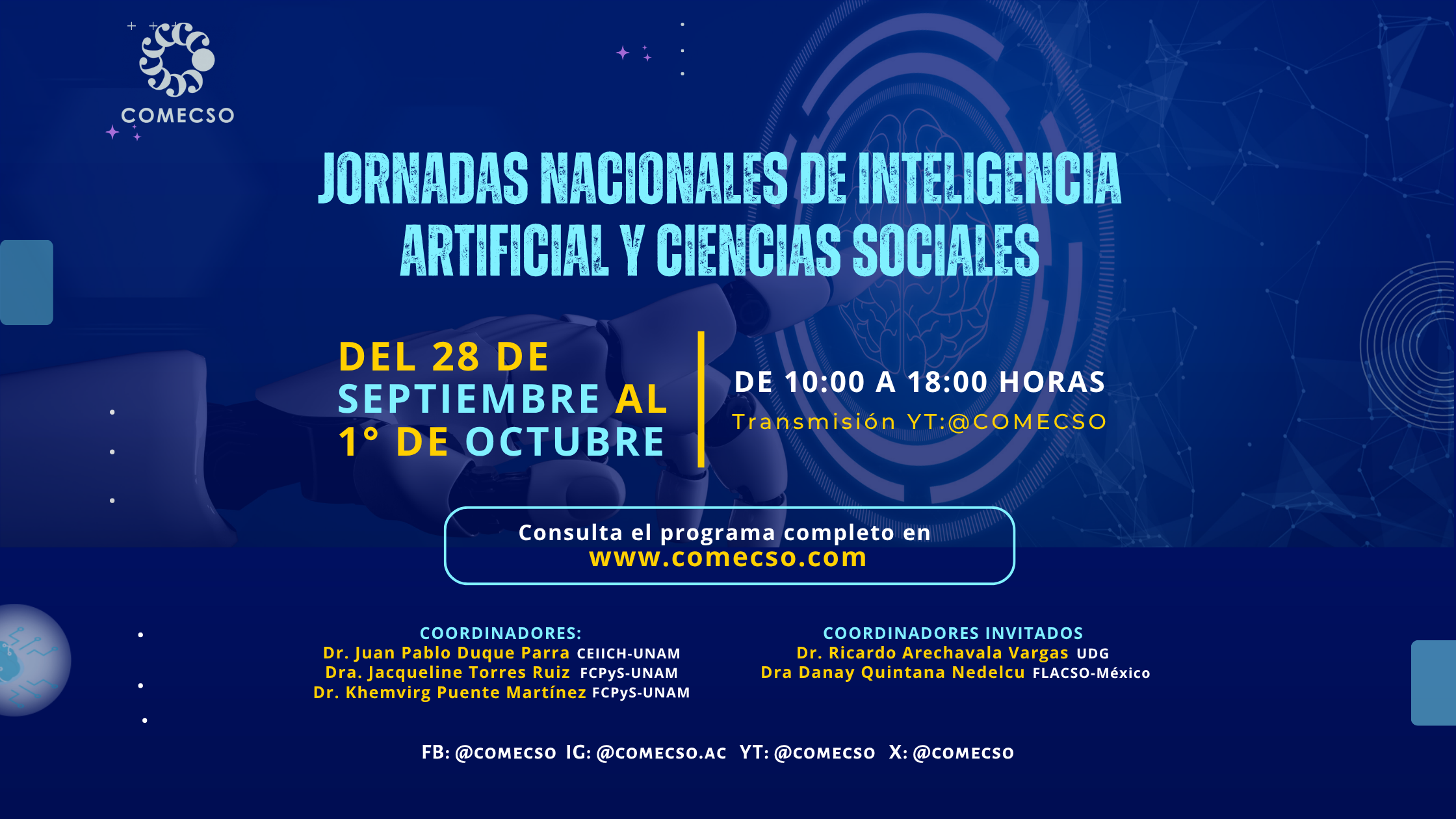
Horizontes de investigación sobre la Inteligencia Artificial desde las Ciencias Sociales
comecso - Sep 14, 2026Coords. Juan Pablo Duque, Khemvirg Puente y Jacqueline Torres-Ruiz Objetivos: Invitar a especialistas de todas las disciplinas de las Ciencias…
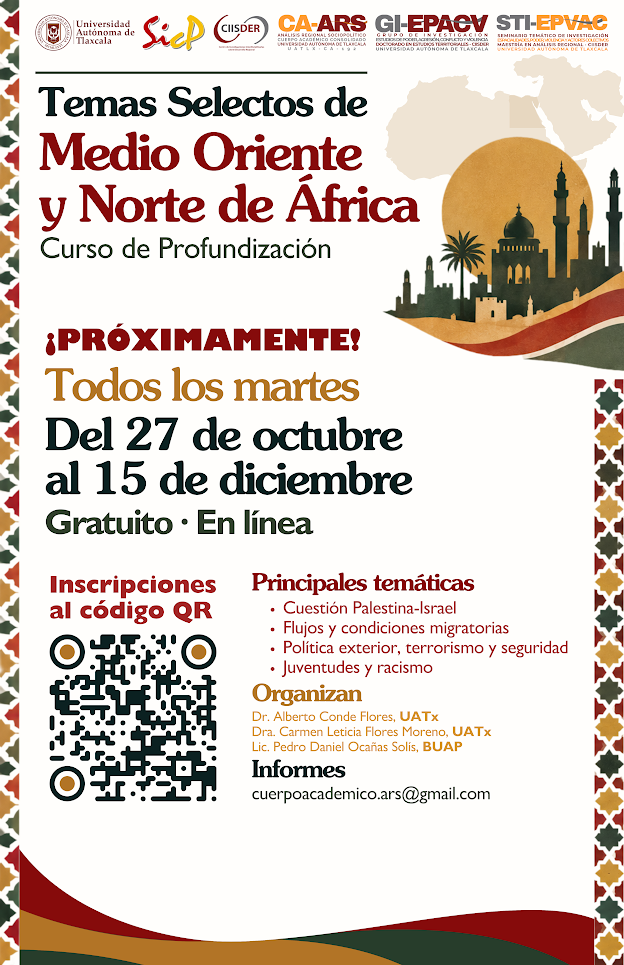
🌍 Temas selectos de Medio Oriente y Norte de África. Curso de profundización
Alejandra Valdés Teja - Oct 16, 2026El Cuerpo Académico Análisis Regional Sociopolítico (CIISDER-UATx) invita a este curso gratuito con especialistas de México, España y Emiratos Árabes…
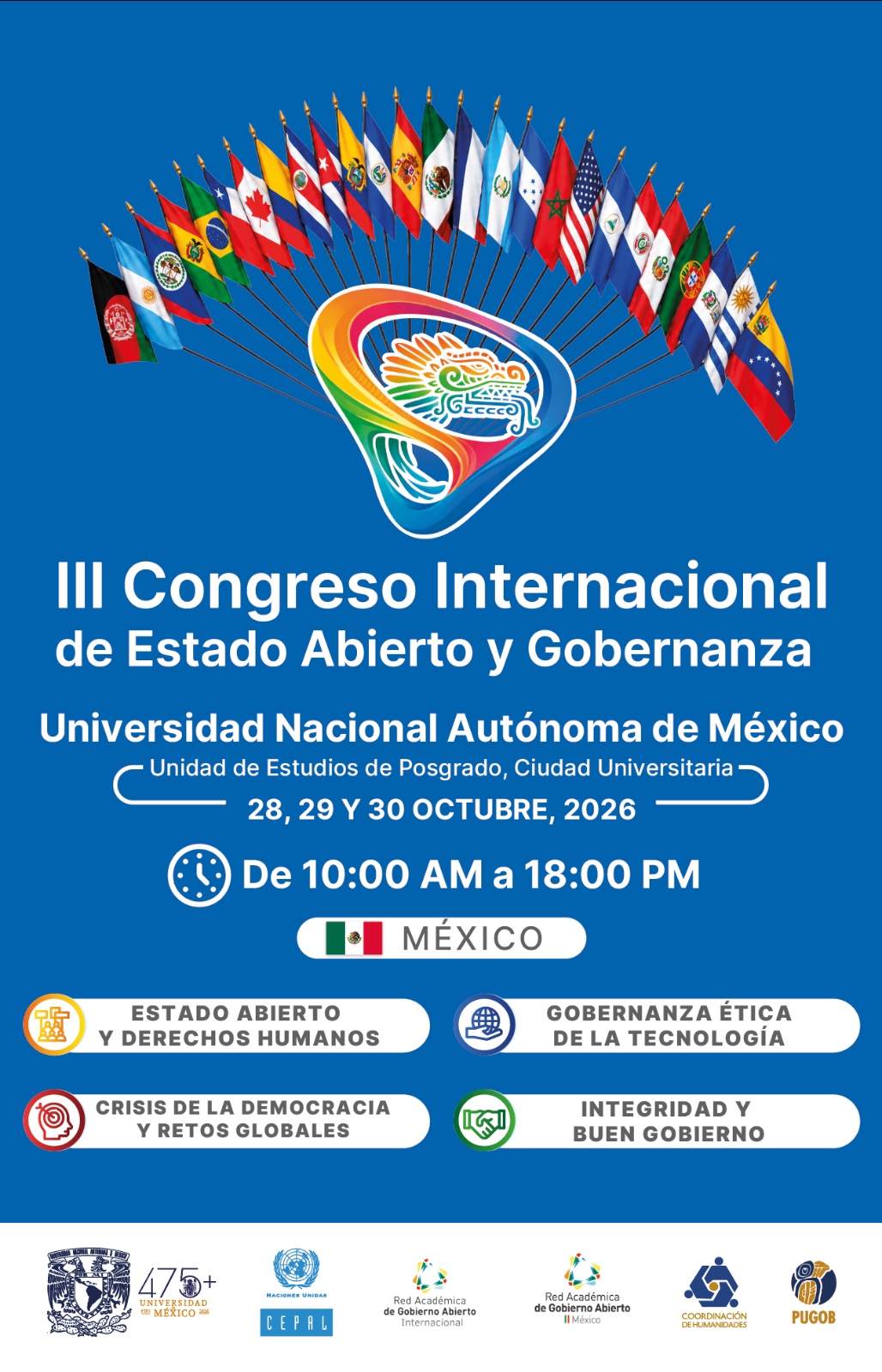
III Congreso internacional de Estado Abierto y Gobernanza
Alejandra Valdés Teja - Oct 16, 202628,29 y 30 de octubre de 10:00 a 18:00 horas. Unidad de Posgrado, Ciudad Universitaria.

Red de cuidados. Avistamiento y dibujo de cuidados interespecie
Alejandra Valdés Teja - Oct 16, 2026Taller organizado en el marco del Mes de los cuidados Red de cuidados. Avistamiento y dibujo de cuidados interespecie 21 de…
Grupos de trabajo
Conferencia La Teoría crítica y los retos actuales para la teoría social
Alejandra Valdés Teja - Oct 07, 2026Horizontes de investigación sobre la Inteligencia Artificial desde las Ciencias Sociales
comecso - Sep 14, 2026Destacadas
El programa de Educación continua del COMECSO invita a sus talleres
Alejandra Valdés Teja - Oct 15, 2026Conferencia La Teoría crítica y los retos actuales para la teoría social
Alejandra Valdés Teja - Oct 07, 2026Horizontes de investigación sobre la Inteligencia Artificial desde las Ciencias Sociales
comecso - Sep 14, 2026🌍 Temas selectos de Medio Oriente y Norte de África. Curso de profundización
Alejandra Valdés Teja - Oct 16, 2026