Voters and Political Parties During the Pandemic


Call for Papers
Voters and Political Parties During the Pandemic: Comparing the Baltic countries, Eastern and Western Europe
5-7 May 2022, Södertorn University Stockholm
Politics during the COVID-19 pandemic underwent transformation and displayed an unexpected dynamic both for voters and political competitors (parties and candidates). The elections organized since March 2020 show no clear pattern among voters: some appeared to punish and others to reward the governments for the ways in which they addressed the pandemic while in office. Political parties had to adapt their campaigning strategies due to the social distancing regulations and general restrictions for personal interactions in many countries. Also, the communication with their own members and the regular party activities had to be changed. This was possible to a large extent due to the broad array of digital tools available to organizers and participants.
Although these changes could be observed at aggregate level, several questions remain unanswered. The research conference aims to understand the complexity of this picture and to answer questions that include but are not limited to the following: What is the role of the pandemic in the voting decision? Who votes during the pandemic? How much trust do people have in political institutions during the pandemic? How important is the online mobilization and interaction? How did parties adapt to the pandemic? How did voting or the profile of voters changed compared to pre-pandemic? What are the effects of voting during the pandemic? Why some parties were electorally (un)successful during the pandemic?
The conference brings together researchers discussing developments in the Baltic countries, Eastern Europe (including the Balkans) and Western Europe, either with an emphasis on single-case studies or with a comparative perspective. The conference will provide the space for an academic debate in which scholars can present the most recent findings of their research. The event will be multi-disciplinary and addresses scholars from political science, sociology, history, and European studies. A variety of perspectives and approaches will be encouraged.
The conference is intended to take place face to face. Depending on the COVID-19 regulations, it may be hosted in a hybrid or completely online format.
There is no conference fee. The organizers will provide accommodation and meals for the entire duration of the conference. Authors should fill in the application form by 15 February 2022 (late applications will not be reviewed). The result of the selection process will be communicated until 20 February. The application form and further details are available on the conference website.


Te puede interesar

El programa de Educación continua del COMECSO invita a sus talleres
Alejandra Valdés Teja - Oct 15, 2026Cartografía social-pedagógica: producir conocimiento y repensar el territorio desde la educación Imparte: Laura Eugenia Alejandri Rábago Descripción Este taller ofrece…
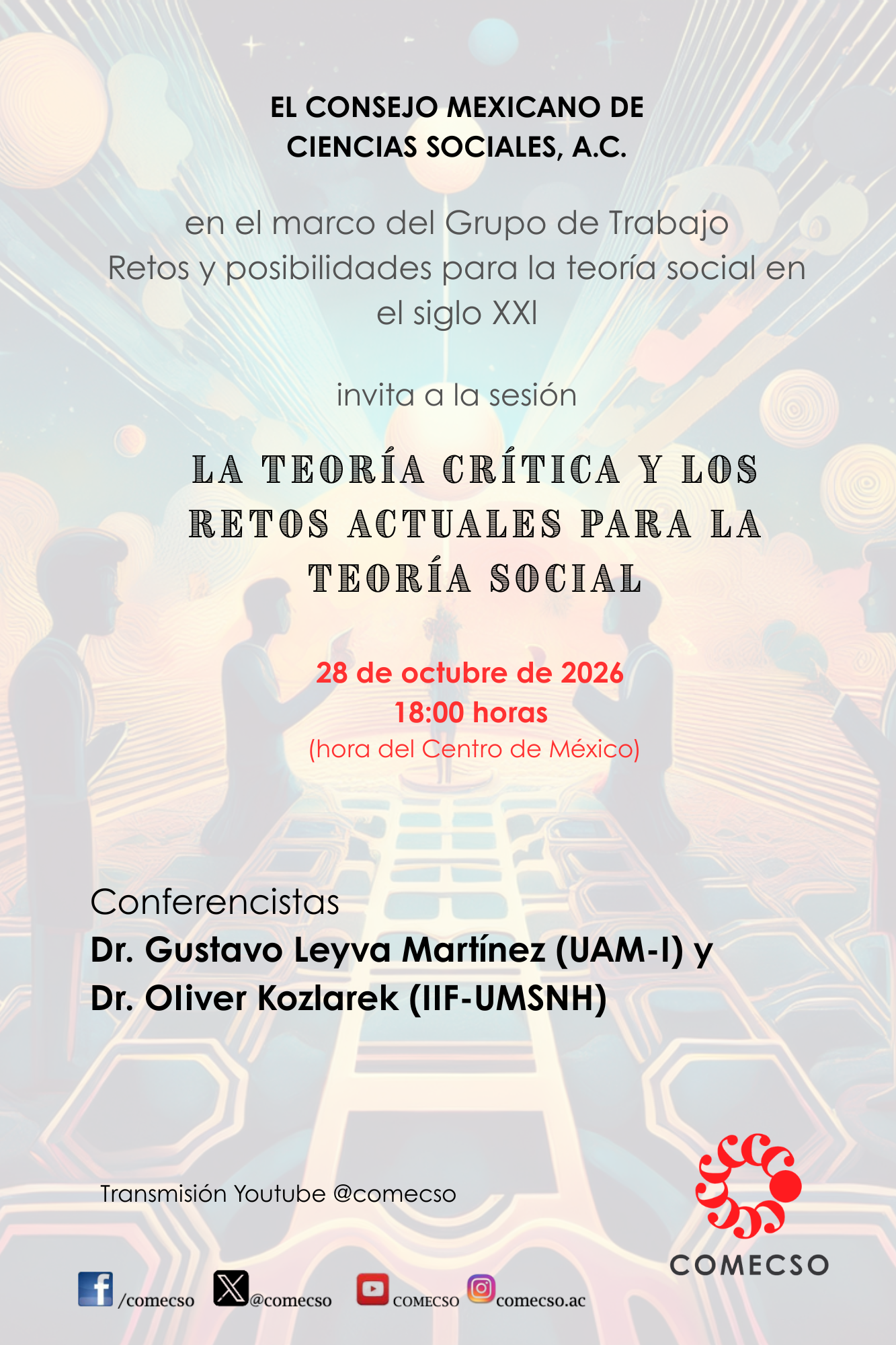
Conferencia La Teoría crítica y los retos actuales para la teoría social
Alejandra Valdés Teja - Oct 07, 2026El Grupo de Trabajo Retos y posibilidades para la teoría social en el siglo XXI invita a conferencia La Teoría crítica…

Talleres virtuales
Laura Gutiérrez - Sep 17, 2026Con el objetivo de transmitir conocimientos y desarrollar habilidades específicas que contribuyan a la práctica docente, la investigación, la innovación,…

Horizontes de investigación sobre la Inteligencia Artificial desde las Ciencias Sociales
comecso - Sep 14, 2026Coords. Juan Pablo Duque, Khemvirg Puente y Jacqueline Torres-Ruiz Objetivos: Invitar a especialistas de todas las disciplinas de las Ciencias…
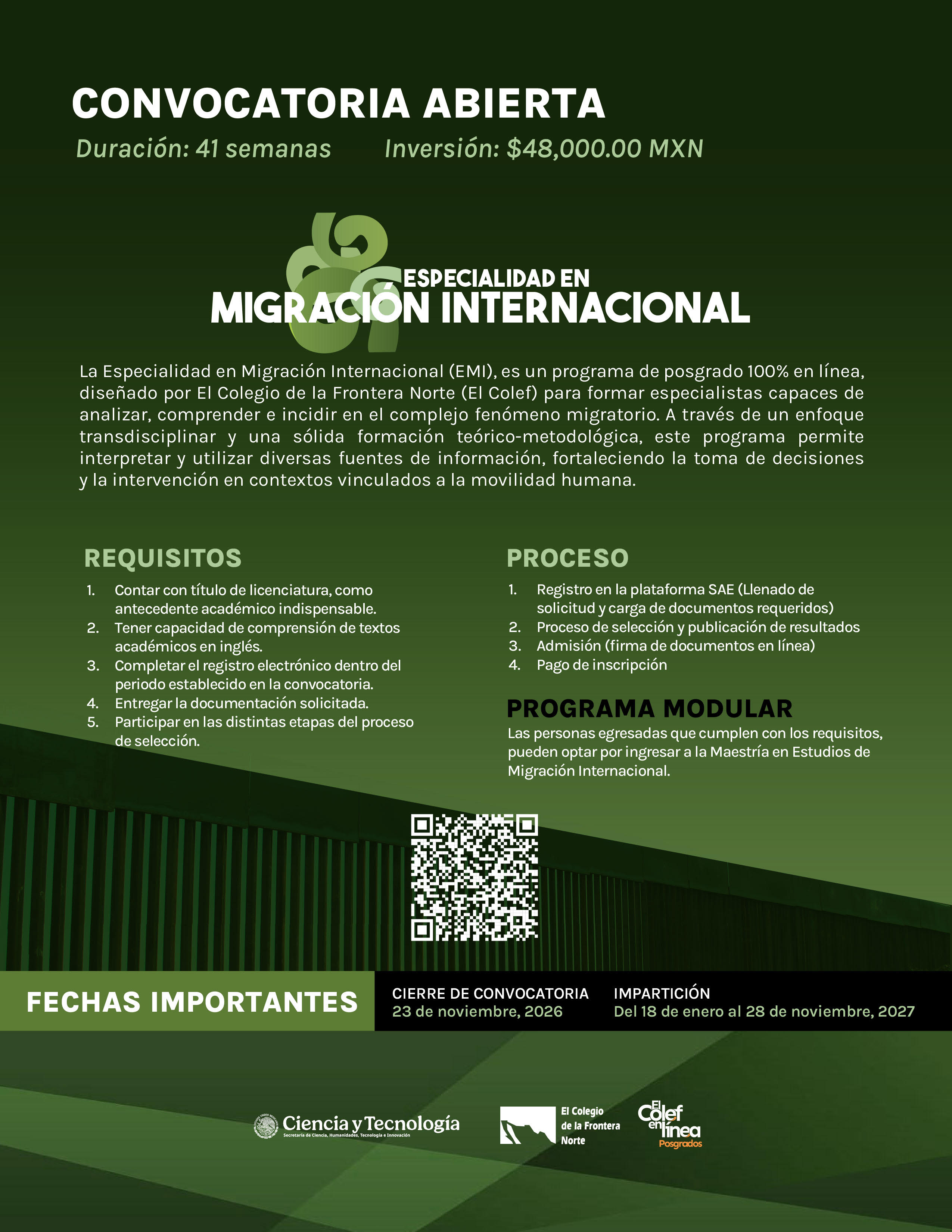
Convocatoria abierta: Especialidad en Migración Internacional de El Colef
Alejandra Valdés Teja - Oct 19, 2026El Colegio de la Frontera Norte (El Colef) abre la convocatoria para su Especialidad en Migración Internacional (EMI). Es un…

Conferencia magistral «Etnografías móviles, relacionales y situadas: Hacia nuevas formas de comprender el habitar futuro en territorios complejos»
Alejandra Valdés Teja - Oct 19, 2026El Grupo de Trabajo Senderos metodológicos para la investigación social contemporánea invita a la conferencia Etnografías móviles, relacionales y situadas: Hacia…
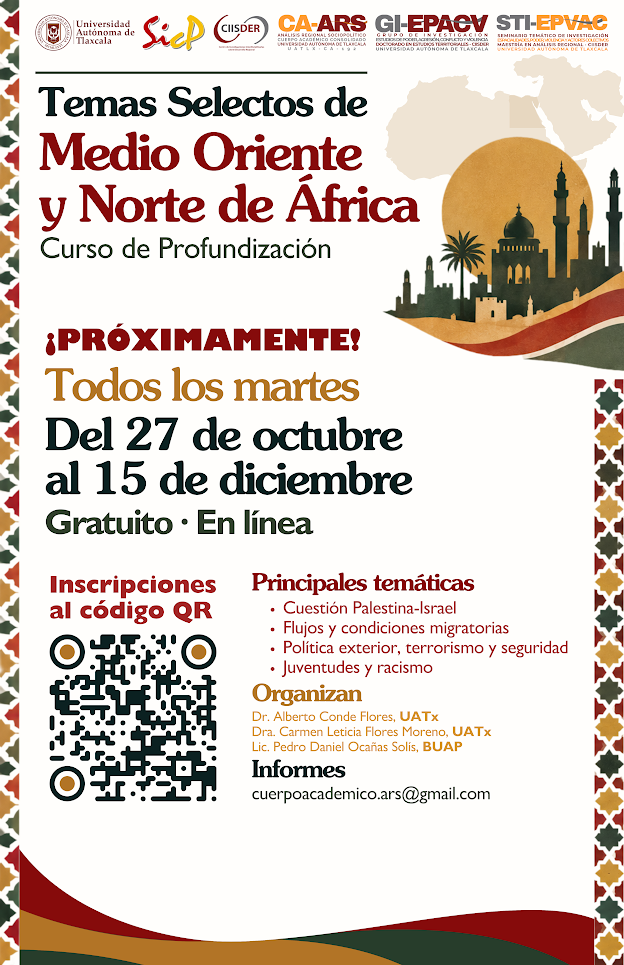
🌍 Temas selectos de Medio Oriente y Norte de África. Curso de profundización
Alejandra Valdés Teja - Oct 16, 2026El Cuerpo Académico Análisis Regional Sociopolítico (CIISDER-UATx) invita a este curso gratuito con especialistas de México, España y Emiratos Árabes…
Grupos de trabajo
Conferencia magistral «Etnografías móviles, relacionales y situadas: Hacia nuevas formas de comprender el habitar futuro en territorios complejos»
Alejandra Valdés Teja - Oct 19, 2026Conferencia La Teoría crítica y los retos actuales para la teoría social
Alejandra Valdés Teja - Oct 07, 2026Destacadas
El programa de Educación continua del COMECSO invita a sus talleres
Alejandra Valdés Teja - Oct 15, 2026Conferencia La Teoría crítica y los retos actuales para la teoría social
Alejandra Valdés Teja - Oct 07, 2026Horizontes de investigación sobre la Inteligencia Artificial desde las Ciencias Sociales
comecso - Sep 14, 2026Convocatoria abierta: Especialidad en Migración Internacional de El Colef
Alejandra Valdés Teja - Oct 19, 2026