Transnational objects, activist solidarities, feminist analytics


December 5-7, 2018, University of Ottawa
Call for papers
This interdisciplinary symposium invites scholars of transnational movements, organizations, networks, campaigns, mobilizations, assemblages and other cross-border activist phenomena to consider: (1) how to more adequately conceptualize, analyze, and theorize such complex transnational objects, including in ways that (2) advance the theory and practice of emancipatory solidarities[1] in the current period and (3) critically consider the contributions of transnational/intersectional feminist analytics[2] to such an undertaking.
We invite theoretically-informed, empirically-grounded studies from researchers working from a range of perspectives on transnational activist objects, who are curious to consider how their subject matter might fruitfully engage feminist concerns. A peer-reviewed edited collection is planned.
Background:
Funded by the Social Sciences and Humanities Research Council of Canada, our five-year collaborative research project on solidarity-building in transnational feminist organizing sought to document and analyze the histories and political dynamics, practices and discourses of solidarity-building around the issue of food sovereignty in the World March of Women; to develop and apply an original, feminist and geographical analytic for studying processes of solidarity-building in transnational organizing; and to make an original contribution to feminist debates about solidarity-building across difference and non-traditional alliances in a context of transnational connectivity. This research benefited from the collaboration of the transnational feminist network the World March of Women (WMW).
We invite researchers working on similar transnational objects to engage one or more of the following thematic areas, which are cross-cutting and open-ended in nature, in a manner that, at a minimum, avoids gender blindness. The questions under each theme have arisen in our research and are meant to be suggestive.
Conceptual and methodological issues in the study of transnational objects
- How can we speak of and study such complex and mutable transnational objects of analysis in terms that respect the diversity of actors involved, their differences; their multi-scales positioning; their power relationships while, at the same time, taking seriously the fact that these transnational entities do have a global existence?
- Do transnational collaborative or interdisciplinary research approaches provide more promising strategies or methodologies?
- What are the relevant units/categories of analysis when studying the dynamics of transnational activist objects?
- What are the methodological and epistemological difficulties in studying transnational activist objects in place- and scale-sensitive ways across world regions?
Geographic perspectives in the study of transnational objects
- What are the potentials and problems in deploying geographical analytics of place and scale in conceptualizing and analyzing transnational activist objects?
- How do such geographical perspectives help us analyze geographies of power and difference in transnational activist objects?
- What is the interplay between place, scale, and territory in the constitution of transnational assemblages, such as those engaging issues pertaining to the environment (eg. food sovereignty, extractivism or climate change)?
Power and the political in the study of transnational objects
- How does a politics of the popular, commitments to popular sovereignty and popular democracy, and strategies for counter-hegemony condition transnational solidarities? Further, how do politics of the popular intersect with (various conceptions of) nation? With the politicisation of gender, ethnic, racial, religious, Indigenous or other forms of difference?
- How do the political projects (variable around place and scale, but also transnational in nature) of these transnational activist objects intersect with colonial histories, coloniality as a present condition, and colonial difference? How do they relate to decolonial projects, for example of Indigenous and Afro-descendent populations in the Americas?
- How do transnational activist objects address questions of hierarchy and power differentials within? How are subalternized populations present, represented, active?
- How might transnational activist objects be differentiated or characterised ideologically? How do pre-existing localized political cultures (or ideologies) impact how transnationalization is undertaken, by whom and with whom?
Solidarity-building and movement-building in transnational objects
- How is solidarity understood and practiced in transnational networks and in relation to a variety of struggles?
- Can processes of solidarity-building be analyzed as instrumental strategies reflecting the actors’ understandings of the purposes of such solidarities in specific contexts? Of the power systems they are trying to change?
- What is the relationship of solidarity-building to broader projects of movement-building or of building counter-hegemonies?
Intersectional feminism as politics and analytic of transnational activist objects;
- What does a transnational/intersectional feminist analytic bring to the study of the transnational activist objects? How do transnational/intersectional feminist perspectives inform or challenge any of the preceding lines of inquiry?
- What accounts for the persistent ghettoization of feminist concerns and approaches from social movement studies across the disciplines?
- What new feminisms are apparent in contemporary transnational activist objects? What is their relation to transnational/intersectional feminism? How are they being taken up by scholars?
- What is the status of women’s survival struggles (e.g., around food sovereignty, extractivism, or climate change)? (How) Are these taken up at transnational scales of organizing?
How to apply:
By March 1, 2018, submit a C.V and proposed title and abstract (300 words), in which you outline the theme or problematic to be addressed and specify the transnational object that is your empirical reference point. Your abstract should clearly establish how it responds to this call for papers. To submit and for all other inquiries: elsabeaulieu@gmail.com
Details for participants:
Symposium papers due: October 15, 2018.
Two nights accommodation and all meals during the symposium will be provided. Some travel subsidies may be available.
All symposium papers will be considered for inclusion in a peer-reviewed edited collection. Submissions should not be already published or under consideration for publication elsewhere.
Acceptance for the symposium is not a guarantee of publication.
First draft of book chapters due: April 1, 2019.
Organized by:
Dominique Masson, Institute of Feminist and Gender Studies, University of Ottawa
Janet Conway, Department of Sociology, Brock University
Pascale Dufour, Department of Political Science, Université de Montréal
Elsa Beaulieu-Bastien, Project Co-ordinator
[1] Solidarity is at the same time a normative injunction, a criteria used to analyze how movements fare in dealing with differences of various sorts, and a praxis that collective actors undertake in order to change the world.
[2] Intersectional feminism invites critical attention to gender, race, class, sexuality, nation, religion, and or other axes of difference and inequality as mutually constituted. Transnational feminism is further attentive to how these dynamics are situated in a global field of power shaped by histories of imperialism.


Te puede interesar

El programa de Educación continua del COMECSO invita a sus talleres
Alejandra Valdés Teja - Oct 15, 2026Cartografía social-pedagógica: producir conocimiento y repensar el territorio desde la educación Imparte: Laura Eugenia Alejandri Rábago Descripción Este taller ofrece…
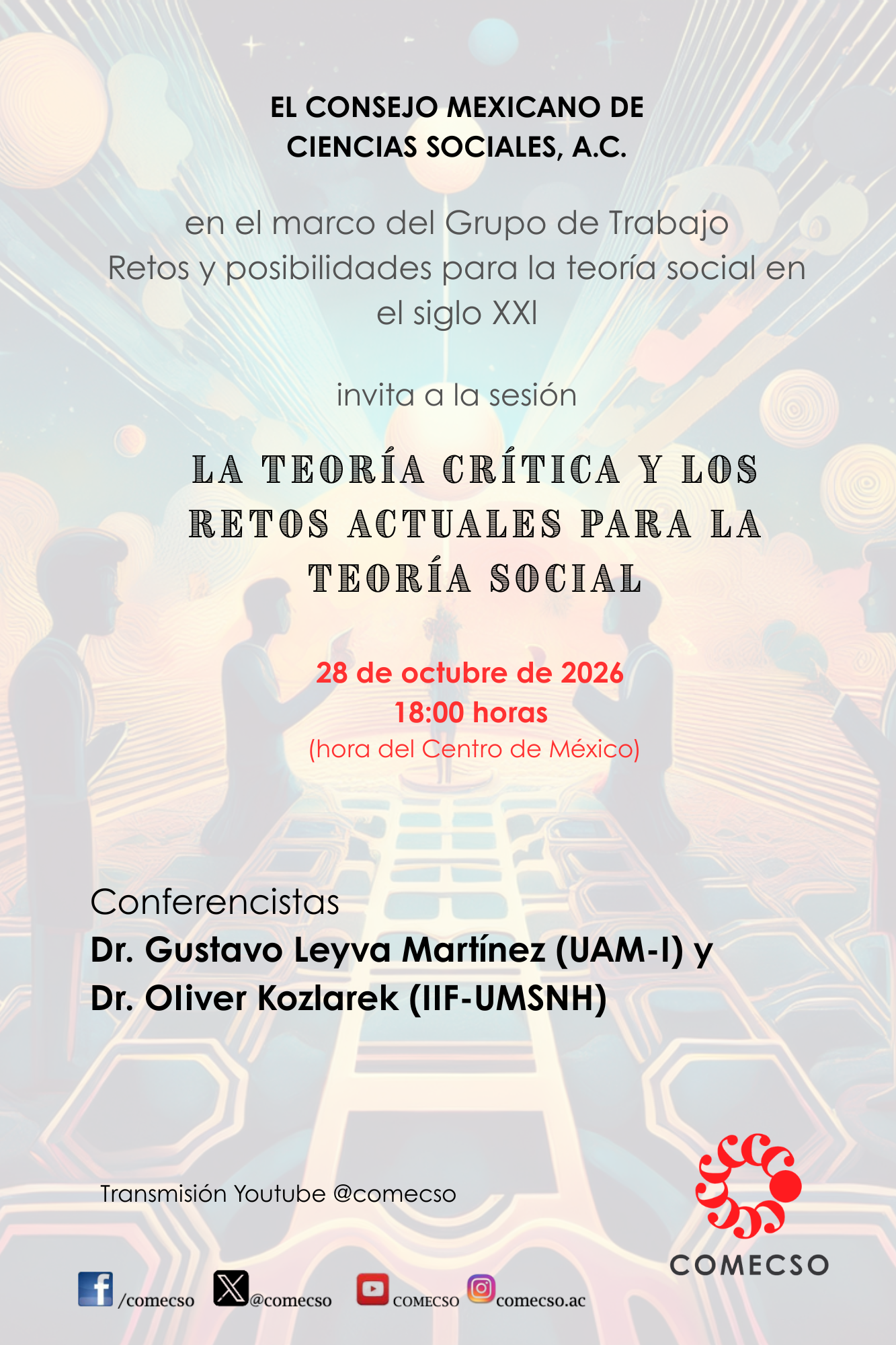
Conferencia La Teoría crítica y los retos actuales para la teoría social
Alejandra Valdés Teja - Oct 07, 2026El Grupo de Trabajo Retos y posibilidades para la teoría social en el siglo XXI invita a conferencia La Teoría crítica…
Talleres virtuales
Laura Gutiérrez - Sep 17, 2026Con el objetivo de transmitir conocimientos y desarrollar habilidades específicas que contribuyan a la práctica docente, la investigación, la innovación,…
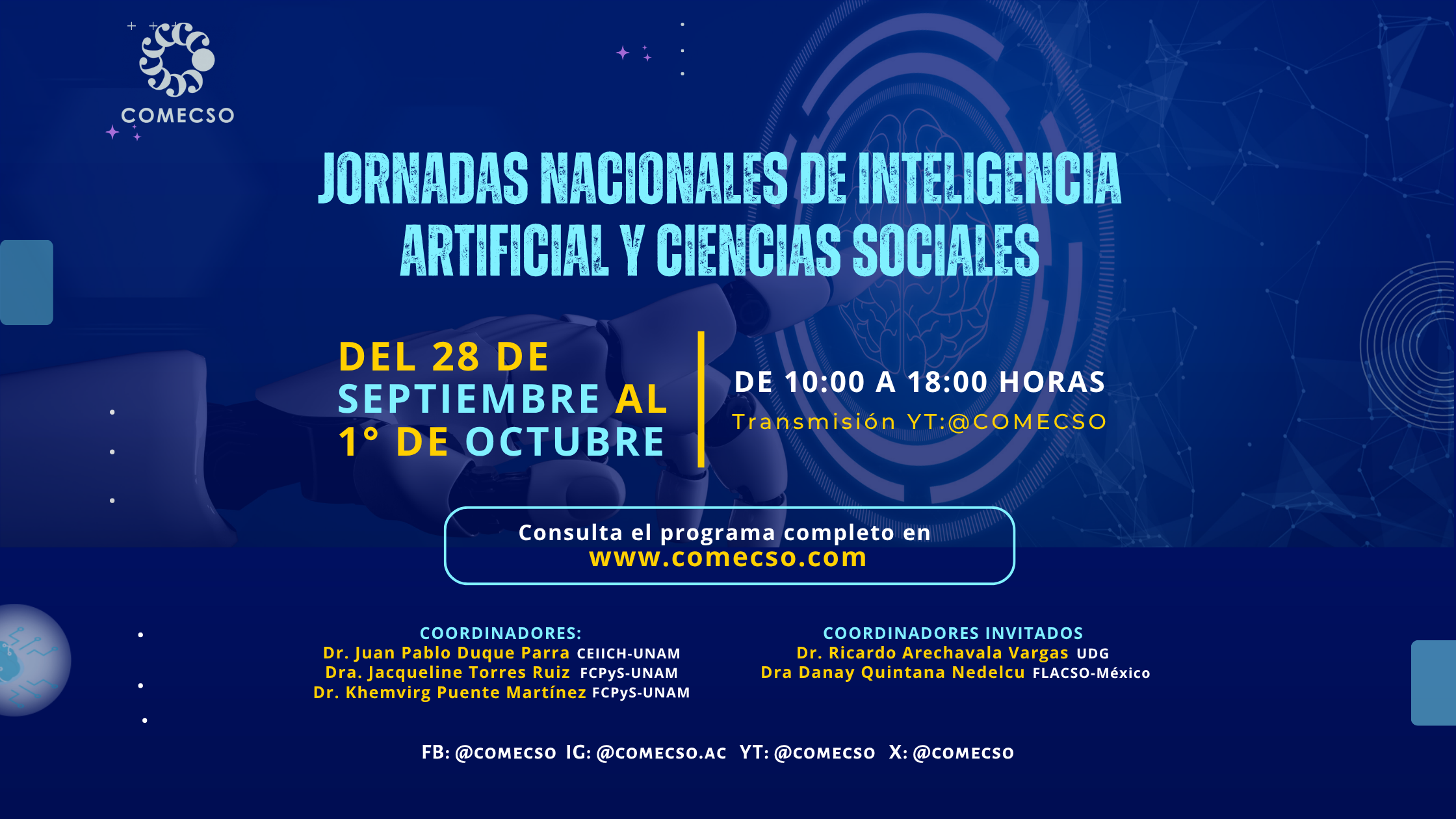
Horizontes de investigación sobre la Inteligencia Artificial desde las Ciencias Sociales
comecso - Sep 14, 2026Coords. Juan Pablo Duque, Khemvirg Puente y Jacqueline Torres-Ruiz Objetivos: Invitar a especialistas de todas las disciplinas de las Ciencias…
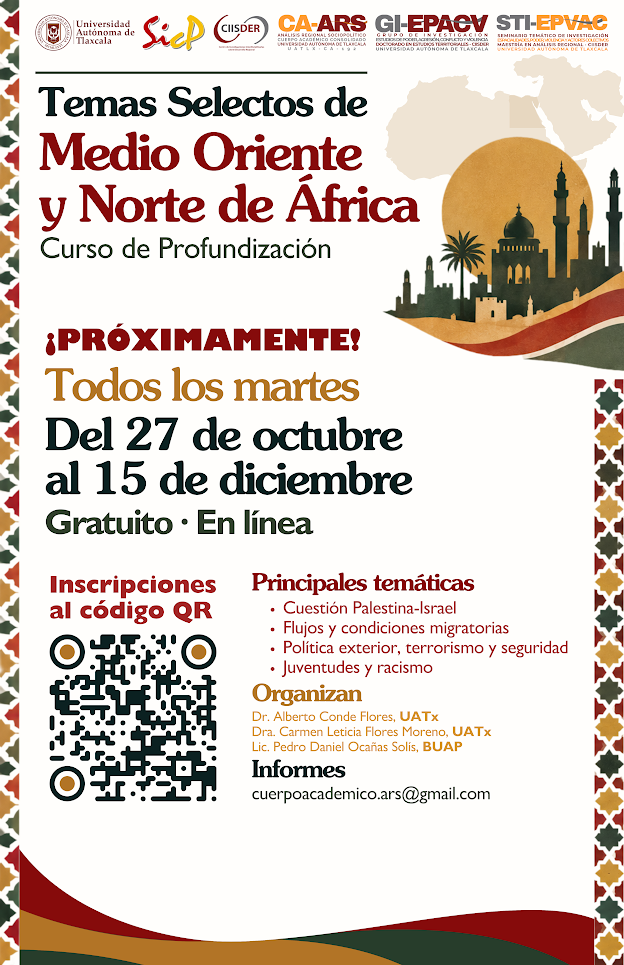
🌍 Temas selectos de Medio Oriente y Norte de África. Curso de profundización
Alejandra Valdés Teja - Oct 16, 2026El Cuerpo Académico Análisis Regional Sociopolítico (CIISDER-UATx) invita a este curso gratuito con especialistas de México, España y Emiratos Árabes…
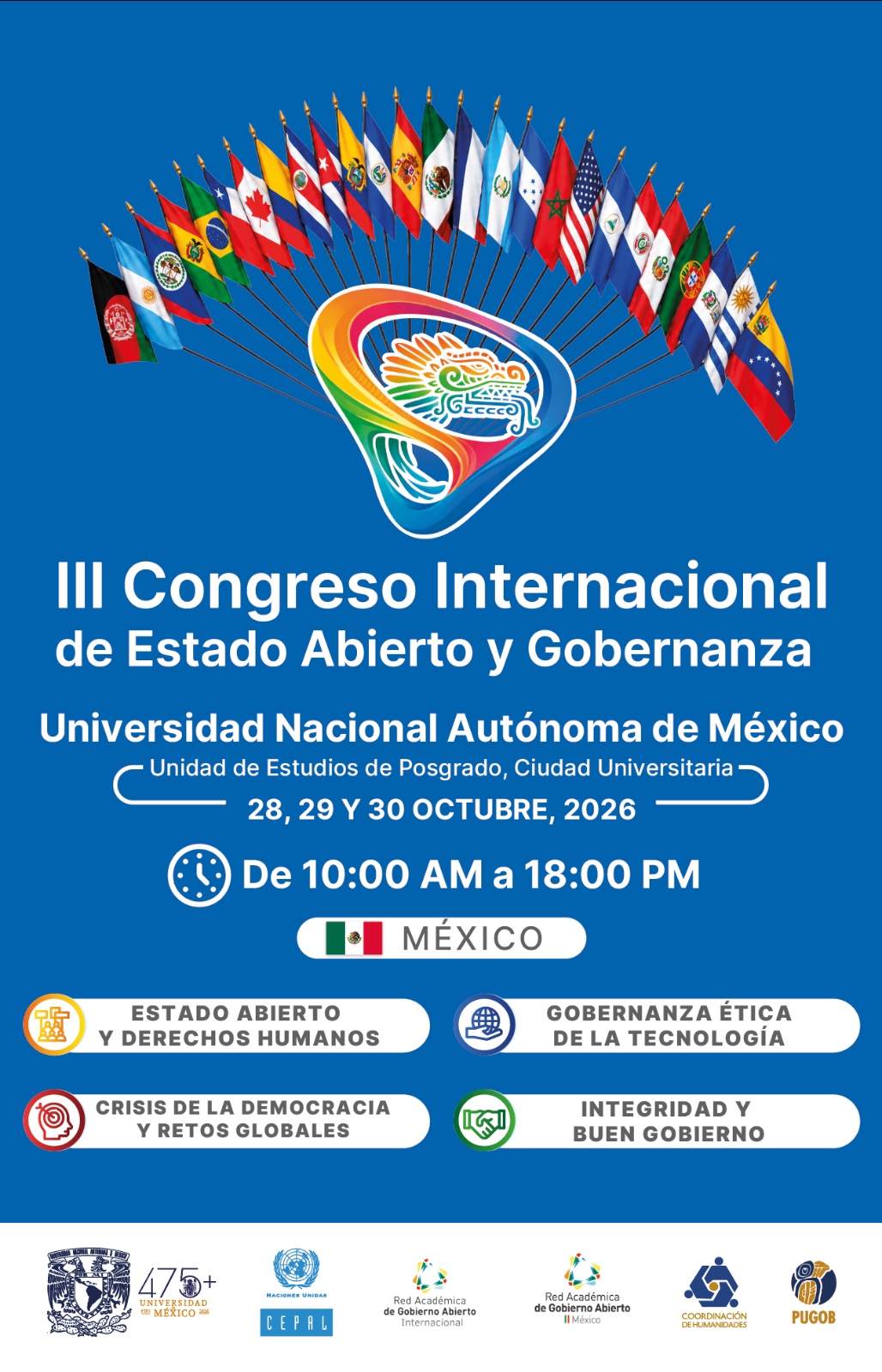
III Congreso internacional de Estado Abierto y Gobernanza
Alejandra Valdés Teja - Oct 16, 202628,29 y 30 de octubre de 10:00 a 18:00 horas. Unidad de Posgrado, Ciudad Universitaria.

Red de cuidados. Avistamiento y dibujo de cuidados interespecie
Alejandra Valdés Teja - Oct 16, 2026Taller organizado en el marco del Mes de los cuidados Red de cuidados. Avistamiento y dibujo de cuidados interespecie 21 de…
Grupos de trabajo
Conferencia La Teoría crítica y los retos actuales para la teoría social
Alejandra Valdés Teja - Oct 07, 2026Horizontes de investigación sobre la Inteligencia Artificial desde las Ciencias Sociales
comecso - Sep 14, 2026Destacadas
El programa de Educación continua del COMECSO invita a sus talleres
Alejandra Valdés Teja - Oct 15, 2026Conferencia La Teoría crítica y los retos actuales para la teoría social
Alejandra Valdés Teja - Oct 07, 2026Horizontes de investigación sobre la Inteligencia Artificial desde las Ciencias Sociales
comecso - Sep 14, 2026🌍 Temas selectos de Medio Oriente y Norte de África. Curso de profundización
Alejandra Valdés Teja - Oct 16, 2026